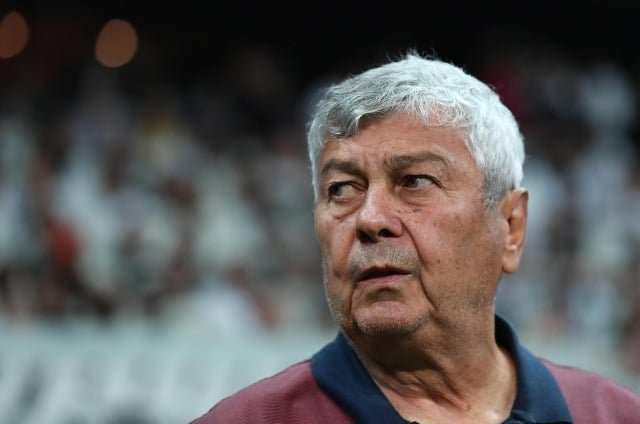
At 80, Romania’s head coach is still chasing the World Cup after an unparalleled career: “Gifts from Anconetani, Brescia chosen by lottery tickets, Moratti’s love for strikers. I was a winger with exceptional crosses; thanks to them, Georgescu won the Golden Boot”
“Everywhere is beautiful if you’re happy, everywhere is ugly if you’re unhappy.” Mircea Lucescu says this because he knows it: he has coached and won 36 trophies (surpassed only by Guardiola and Ferguson) in 5 countries; at 80, he leads Romania and dreams of going to the World Cup. Lucescu didn’t just win in soccer; he innovated. Starting with himself: “I attended the School of Economic Sciences in Bucharest; back then, students weren’t allowed to train with the pros. So I trained on my own, and managed to bring my left foot up to the same level as my right.”
What kind of player was Mircea Lucescu?
“A winger with exceptional crosses, thanks to which Georgescu won the Golden Boot. I played for 10 years at Dinamo Bucharest, made the national team, and in 1970 I captained Romania against Pelé’s Brazil; they even invited me to play for Fluminense. They had spotted me in a four-team tournament at the Maracanã: Romania, Flamengo, Vasco da Gama, and Independiente. I was the best player, and as a prize they gave me a car radio. Then, in 1977, the earthquake struck Bucharest…“
And what happened?
”My house was destroyed; I had to flee. In Hunedoara, they helped me, and I helped them: I became a player and a coach. I didn’t conform to everyone else’s style of soccer; I developed my own philosophy. First and foremost: education, at every level. Then discipline—not imposed, but based on respect—and instruction: I took the kids to museums, the theater, and factories; they had to understand the world. Finally, tactics and different working methods. I play a hyper-offensive style: ball possession, runs into space, creating openings, pressing, tactical fouls if necessary—what they do today, I was doing 50 years ago.”
What was soccer like in Ceausescu’s time?
“I can’t win the league with Dinamo because his son is at Steaua, but my position is delicate because I also coach the national team. Even there, I do things my way: I immediately bring in 3–4 young players from provincial clubs. Everyone is against me, so we organize a friendly match: my team against a selection of Bucharest’s best players chosen by journalists, and we beat them 3-1. That’s when they realize my ideas work. To prepare for the 1984 European Championship qualifiers, I took the boys to South America: we played against Argentina, Chile, and Peru; in El Salvador there was a revolution and we had to go running at night… But it helped us immensely; we won our qualifying group, even beating world champion Italy. In 1986, I was fired; three years later, Ceausescu fell, and I won the league and the cup. Do you know where I was when I heard the news?”
Where?
“In Cagliari, a guest of Anconetani for the Italy-Argentina match. In the end, I accepted his offer; I liked him. But working with him was difficult—he always wanted to be the center of attention. You remember him with the salt on the field, don’t you? I have fond memories of him—a cheerful man, a devout Catholic who never misses a Mass at Piazza dei Miracoli, and generous: at every training camp in Montecatini, he gives the players a gift. But he also wants to make money: he sells me one a month, then kicks me out.“
And that’s when Brescia came along.
”By chance. Corioni was looking for me, but Standard Liège and Porto wanted me too. So my wife, my son, and I wrote three little notes, and we drew lots. But when it came time to draw, one was missing—strange. I found it two days later, stuck under a shoe: Brescia. A sign of destiny.”
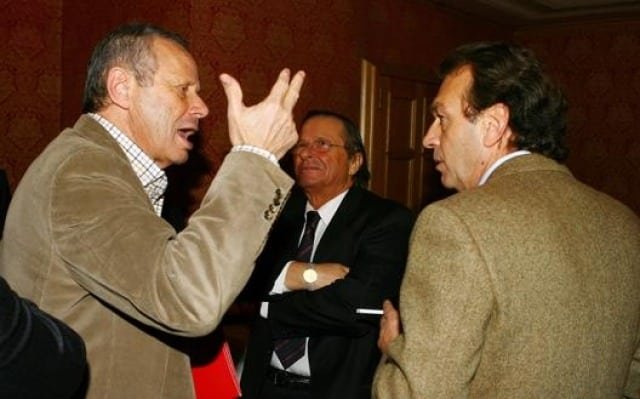
Corioni, another of his legendary presidents.
“A man of extraordinary intuition. Italy thrives on ‘colonies’: the Dutch at Milan, the Germans at Inter, the Uruguayans at Cagliari… so I convinced him to make Brescia the ‘Romanian colony.’ We signed Hagi, who wasn’t happy at Real Madrid: he trusted me, made a smart choice, and two years later played a great World Cup and was called up by Cruyff to join Barça. The great thing about Corioni is that with him I can give young players a chance; he’s happy because he sells them later. I put Pirlo in at 16 in the 2-1 game against Ipswich in the Anglo-Italian Cup; he loses the ball and it becomes 2-2, then I have to argue with Luzardi, who accuses me of putting the kid in…”
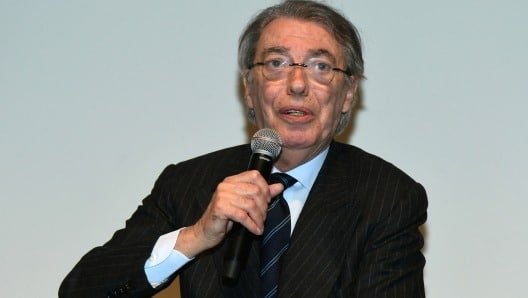
Moving on to Moratti.
“A true gentleman, he tried to convince me to stay, but at that Inter I had 10 players whose contracts were expiring, and he had let it be known that the following year he would bring in Lippi, which created problems for me. Moratti: still, he’s the soul of the club; you can feel his love for it. He’s the embodiment of a golden age when Italian soccer belonged to the great families. Today it’s no longer like that: funds, investment groups, foreigners… yes, we play, we do business, but soccer has gone from being entertainment to becoming an event.”
But what an attack that Inter had…
“Baggio, Djorkaeff, Recoba, Ronaldo, Zamorano… Moratti is in love with strikers; if he’d also signed a few strong defenders, who knows how much that Inter side would have won. I have an exceptional relationship with Ronie: a friend brings me oranges from Sicily, I give him some, and he returns the favor with bottles of Brahma beer.”
Akhmetov, the man behind the Shakhtar dream.
“I tell him that before we build a great team, we have to play great soccer. I don’t want champions, but talents to develop, and I know the Brazilians well. I see Neymar and Casemiro—they’re excellent—but they tell me we can’t sign them. Okay, what about the others? Douglas Costa, Teixeira, and Fernandinho arrive; we create a system where Shakhtar makes a lot of money, and if they sell one player, they already have a replacement. Akhmetov doesn’t do this for himself; he invests everything in the team. He builds the most beautiful stadium in Europe; we beat the big clubs; we’re young, strong, and we play great. We win the UEFA Cup, and every year we make it to the Champions League quarterfinals or so. Do you know how hard it is to establish a team from the East at that level? If the war in Donbass hadn’t broken out, maybe we could have won the Champions League one day. Akhmetov is a wonderful president because he wants to learn; after the games, we go out to dinner or karaoke because he loves to sing—we talk about soccer, about life.”
A few years later, he went to rivals Dynamo Kyiv…
“They called me; I thought they wanted some friendly advice, but instead they asked me to take over the team that had lost the league by 23 points. I accepted, and with the same squad, I won it by 11. One day they told me 30 million had come in and they wanted to know who to buy. I replied: ‘No one. Instead, build a new gym and buy some minibuses for the youth teams. Those are the investments that last.’”
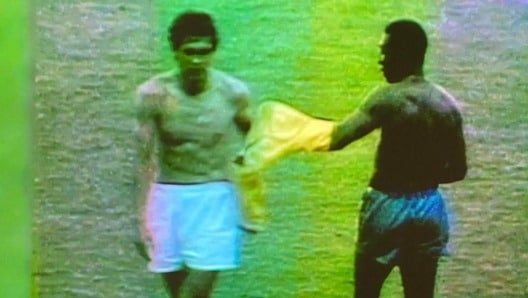
In 1970, at the end of the match, he traded jerseys with Pelé.
“I still have it. It’s dirty with dirt; I’ve never washed it. I had it framed; it’s in a museum.”