The sporting director has been in Cyprus since December 2023: “I realized right away that we could build something important. At first, I struggled to convince players to come here; today, those who arrive don’t want to leave.”
In Cyprus, there’s a resort town that brings locals and foreigners together under a single passion: soccer. Pafos is a tiny speck on an island that, until eleven years ago, was exclusively a tourist destination. Today, the Champions League anthem rings out there. The club, which also won its first-ever Cypriot league title last May, has 21 foreign players on its roster (including David Luiz), Russian ownership, and a modern sports complex. One of the architects of this feat is Cristiano Giaretta, a 57-year-old from Vicenza and Pafos’s sporting director. After a career spanning Italy, Bulgaria, and England, he has been working behind the scenes for a year and a half, guiding this young club toward success and revealing all its secrets.
Where did this dream begin?
“I arrived in Pafos on December 15, 2023, leaving Watford and a potential move to the Premier League. From the moment I first visited the club, I realized we could lay a solid foundation to build something significant: I believed in the Champions League ever since we won the Cypriot league for the first time last May.”
Now you have a European presence, which also helps attract players. David Luiz was the first—how did the negotiations begin?
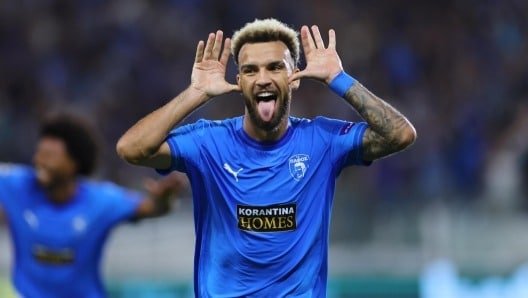
“First of all, we were looking for a center back. We’ve always kept an eye out for those ‘high-profile’ players who could also bring visibility to our club. David is one of them: he has 23 million followers on Instagram and has certainly made Pafos a better-known club. The goal is to align the needs of the field with those of promoting the brand worldwide. Although we don’t want to build a team of just big names. The deal also came about thanks to his agent. David, I assure you, is a great guy, and his leadership will help us a lot on our European journey.”
Cristiano, can you tell us a bit about what Pafos is like?
“We have a state-of-the-art sports complex, built four years ago. There are three natural-grass fields that are kept in perfect condition thanks to our team of groundskeepers. We also have a gym, a barbecue area, our offices, and courts for padel, futsal, and beach soccer. In short, we have a comprehensive facility where players, along with their families, can spend their days off. We’ll soon be expanding the sports center with three more fields, bringing the total to five natural-grass fields, plus a restaurant and a medical clinic. On top of all this, we have our own hotel where we host the foreign players from the Academy.”
Is the stadium the missing piece?
“Yes, that’s what we need to keep growing. Here in Cyprus, there are complicated bureaucratic issues, but we’ve been working on it for some time, and in two summers, construction on the new stadium should begin: there’s a great plan behind it as well. The idea is to have a modern 10,000-seat facility.“
You have 21 foreign players on the roster, but you’re strongly focused on the youth academy.
”We invest heavily in young players. We have all age groups, from Under-9 to Under-19, where we’ve already won three consecutive championships—and last year, the national cup as well. The club is very competitive in this regard. We work extensively with foreign players: Brazilians, Croatians, Portuguese… We’re also trying to develop Cypriot players: it seems that in a couple of years, teams will be required to field at least one local player. Right now we have three on the roster, but we need to prepare for that.”
Player selection: algorithms or scouting?
“I have a team of scouts who work closely with me. Two of them are based here in Paphos, while the others live in their home countries in South America and Europe. We rely heavily on data—both physical and technical—but only as a supplement. I place great importance on certain metrics, especially athletic ones: speed over distance or the top speed an attacking winger can reach. These are aspects that give you an idea of who you’re evaluating. Our process begins with a video screening of players of any nationality; we make a list and narrow it down until we create a sort of shortlist. From that point on, the in-person evaluation phase begins: lifestyle, habits, family, their background… We examine everything from every angle.”
Why did you choose Cyprus?
“I have an international mindset. I’ve been outside Italy for 7–8 years now. After Ascoli, I went to Bulgaria to play for CSKA Sofia, spent four years at Watford, and have been with Pafos for two years now. I was intrigued by the vision behind this club: the Russian owners made a great impression on me, as did the facilities. And then there’s the quality of life.”
Tell us more.
“Life in Paphos is wonderful. It’s a booming resort town: there are villas by the sea, all set against a beautiful natural backdrop. There are all kinds of tourists—British, Russian, and even Italian. It’s a popular island; the cost of living is reasonable, and the food is healthy and high-quality. Families also spend their days outdoors enjoying the sunshine. At first, I had a hard time convincing the players to move to Paphos, but once they came here, they didn’t want to leave.”
What’s a typical day like for you?
“In my day-to-day work, I’m in the transfer market all year round. I never stop staying in touch with the world and with my staff; I never stop scouting players, offering our own players to the market, and so on. I hold weekly meetings with the medical and coaching staff, as well as with players who might not be getting much playing time and aren’t entirely enthusiastic. I spend my days at the training center every day of the week: I arrive at 9 a.m. and leave at 9 p.m. To do the job of sporting director well, you have to stay in constant contact with the team, coaches, agents, and representatives.”
How do Cypriots experience soccer?
“They experience it with passion and intensity, especially among fans of the big clubs like APOEL or Omonia Nicosia, where they fill their stadiums with 20,000 people. For us, on the other hand, 8,000 people come to the stadium. That’s a big step forward when you consider that, until recently, Pafos had only a few hundred fans. Here, the week is all about soccer: there are radio stations, TV channels, social media, and local newspapers constantly talking about the game.”
Any talented players you’d recommend to European clubs?
“We have plenty on our team. I’ve already brought in players from Europe. Domingos Quina comes from Udinese, Ken Sema from Watford, and Derrick Luckassen came up through the ranks in the Netherlands with AZ and PSV… Two or three of them could easily play in Serie A—not for the top clubs, but for mid-table teams. Sema, for example, was a starter at Udinese and had offers from Atalanta. Our ownership invests heavily, as does that of Aris Limassol—they’re Russian too—as well as APOEL and Omonia.“
Foreign players, but also coaches.
”On our bench, we have Juan Carlo Carcedo, a Spaniard who worked with Unai Emery for 15 years. He’s been part of the coaching staff at major clubs like PSG, Arsenal, and Sevilla. You have to come to Cyprus to understand; otherwise, people think we’re behind in every aspect. That’s not the case—I assure you.”
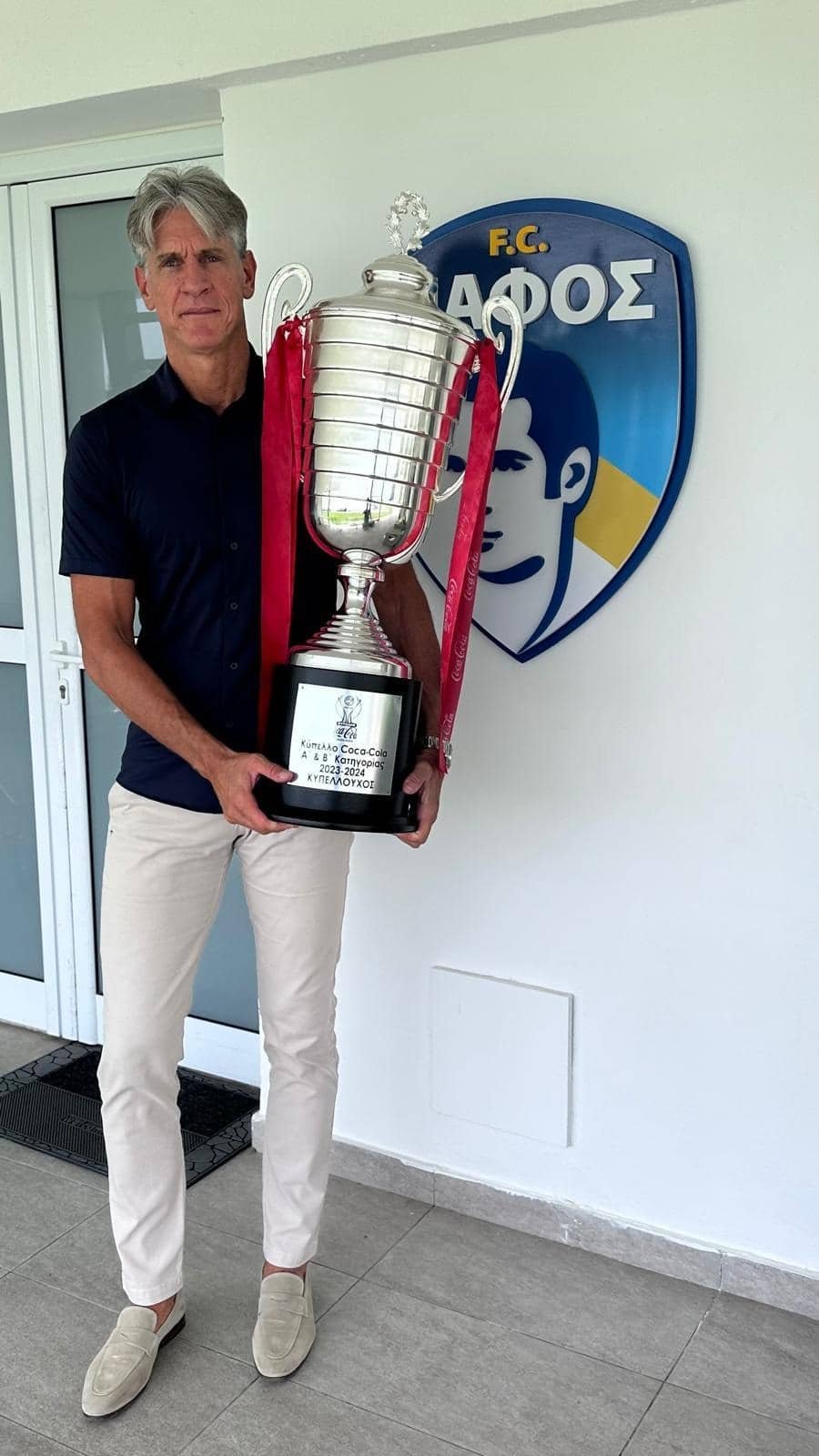
“Pafos had never won anything before. So far, we’ve lifted two trophies (the national cup and the league title, ed.), and the fans were waiting for nothing else, so it’s a huge honor. Furthermore, there’s also a style of good soccer that we believe in and aim to showcase, combining ball possession with high pressure. Against Aris—the match that clinched the league title for us last May—we won 4-0 thanks to an exciting performance. Ours is a team that runs a lot, and here I return to the topic of athletic data, an important factor in the final selection of players.”