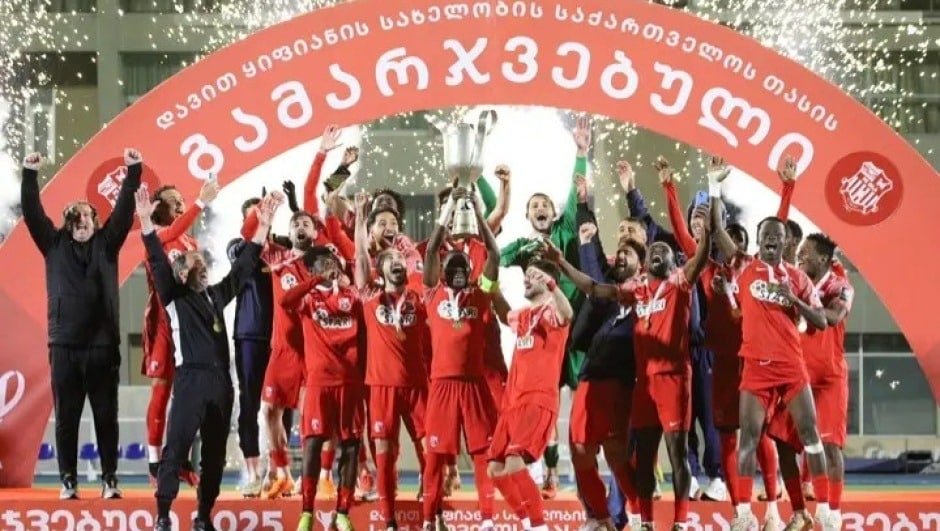
From Romania to Georgia, via Qatar’s “fake soccer” and corruption in Albania: the Ligurian coach recounts his twenty-five-year international career and his latest success with Dila Gori. “Italy? 90% of the teams play old-school soccer”
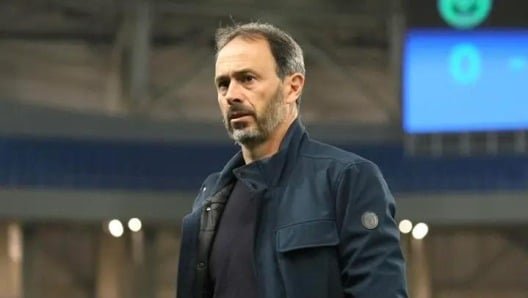
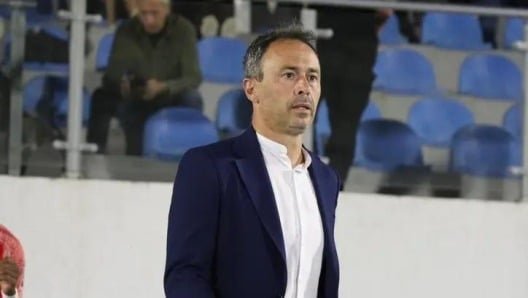
Romania, Qatar, the United Arab Emirates, Albania, Ukraine, Greece, and, finally, Georgia. At first glance, this might look like a map drawn by an experienced traveler marking the countries he’s visited. Instead, these are the leagues where Diego Longo—an Italian coach who has just won his first two trophies with Dila Gori, the team from Stalin’s city—has coached.
Diego, how did you end up coaching in Georgia?
“It’s just the latest stop on a wonderful journey that’s lasted 25 years. I started very early, with the youth teams in Liguria, my home region. Then, in 2005, I began my partnership with Răzvan Lucescu, son of the legendary Mircea Lucescu. I traveled the world with him as his assistant.”
Where did you start?
“In the Romanian league: Rapid Bucharest and Brașov. We did well and ended up coaching the senior national team—a very strong Romanian squad featuring Mutu and Chivu, who was our captain.”
What are your memories of Chivu as a player?
“Cristi is a true great, a humble champion, always willing to help others—and by ‘others’ I mean absolutely everyone, not just his teammates. I remember that, during an away game in Hungary, at the end of a long trip, the players got off the bus with their duffel bags in hand and headed straight to the hotel to rest. He, on the other hand, stayed on the bus and helped the equipment managers unload all the gear. His teammates saw what he was doing and came back to help him.”
And what about Chivu the coach?
“I respect him a great deal, first and foremost because he’s one of the few former players who doesn’t rely on his name to advance his career: before starting out, he studied extensively, unlike many others. And then his Inter is one of the few Italian teams that plays attractive soccer. As a coach, I obviously follow all the European leagues, but I really struggle to watch the Italian one: 90% of the teams play an outdated style of soccer, not very international, with overly tactical approaches. There are some games that are really hard to watch, like those played by Lecce and Verona; on the other hand, I really like Fabregas’s Como, which has a vision of soccer very similar to mine.”
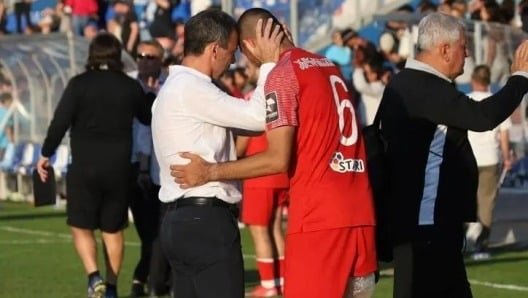
Let’s continue our journey: you were also in Qatar, at Al-Jaish Sport Club.
“We even won a cup with them. No one will ever be able to do that again, partly because the club no longer exists. The team, founded to represent the Qatari Armed Forces, was disbanded in 2017 over a financial issue. I have fond memories of that experience, but that world isn’t exactly my cup of tea.”
Can you tell us about an incident?
“In Qatar, there isn’t a strong soccer tradition, and it’s often hard to fill the stadiums. Before the games, these huge buses arrive full of laborers: construction workers, factory workers, carpenters. As soon as they get off the bus, each one receives a home team scarf, a small envelope with money, and a slip of paper listing the chants they’re supposed to shout. Once the game is over, they all get back on the bus, head to another stadium where a game is being played, pick up a different scarf, a slip of paper with new chants, and go watch another game.”
You’ve also been to Inzaghi’s Al-Hilal: in your opinion, is Saudi Arabia the new frontier of soccer?
“Another great adventure—if they asked me, I’d go back tomorrow. But that isn’t my world either: it’s fake soccer, all artificial, built from nothing, just like their skyscrapers springing up from the desert. The investments are enormous, but the roots, the culture—that doesn’t exist, and you can’t buy it. We Italians are born, grow up, and die with soccer; for us, it’s a story of sons and fathers, grandparents and grandchildren. That’s our strength. That’s why I refused to watch the Super Cup in Riyadh: we mustn’t mimic that kind of soccer.”
So, in your opinion, is it a bubble that’s going to burst?
“I think so. To me, these extravagant transfer campaigns are just one big advertising stunt leading up to the 2034 World Cup in Riyadh. I’ve heard a few things about that event, and I can assure you it will be the most lavish event in human history: I can’t say anything, but there are plans for things that, even just imagining them, seem almost impossible.”
And in Greece, you visited PAOK.
“Xanthi and PAOK. Greece is an incredible country: I’ve never witnessed such passionate support—every stadium is a madhouse. We also won a lot with PAOK. We left after the 2018 suspension, when President Ivan Savvidis—a Russian oligarch of Greek origin—entered the field before stoppage time with a gun in his hand and threatened the referee after a goal against AEK Athens was disallowed for offside with the score tied at 0-0. In the end, Fernando Varela’s goal was awarded two hours after the match ended, and the league was suspended. That incident made me leave Greece.”
When did you make the transition from head coach to assistant coach?
“After my stint in Ukraine, at Dynamo Kyiv. That was my last year as an assistant: I decided the time had come. It was 2021; I already had an agreement to go to Saudi Arabia, but it fell through at the last minute. I risked missing the season, so I decided to go to Albania, to Kukësi.”
What’s the Albanian league like?
“The most corrupt league in the world. The relationships between clubs and soccer and non-soccer institutions are very complicated. I’ve seen a lot of unacceptable things, but there’s one incident that tops them all.”
Can you tell us about it?
“In my first year with Kukësi, we were battling Partizani for the last spot in European competition. They’re one of the biggest teams—the Albanian equivalent of Juventus—and they wield incredible power. The day before the match, they took away our training field, saying they’d organized a game for their Under-16 team. But the worst happened the next day. During the match, the VAR was disconnected for 15 minutes—‘technical issues,’ according to the referee. At that point, we were denied two clear-cut penalties, while a fabricated one was awarded to Partizani, who went on to win and qualify for Europe. After the final whistle, I stormed into the locker room and told my president that he had to speak up, that the situation was unacceptable. He, who at the time was also the mayor of an Albanian city, replied, “Don’t get angry—this is fine with us.” He was arrested a year later.”
Why was that?
“A sex scandal: they planted a camera in his office, and the video even ended up on YouTube. I think you can still find it. But his adventure in Albania continued. First at Flamurtari and then at Teuta. I led the team—which wasn’t doing well—to the playoffs for the top league, but we lost the playoff game because of a last-minute blunder by the goalkeeper. After Teuta, where there were no facilities or youth academies, I quit and returned to Italy.”
In Serie C, at Sestri Levante.
“It was like going back to Albania: there was no desire to take that step forward.”
And then the move from Genoa to Georgia, to Dila.
“The city where Stalin was born: we have a museum named after him with various memorabilia. There are still busts of him around the city, but they aren’t objects of worship: there’s no nostalgia for communism; tourists take selfies with them.“
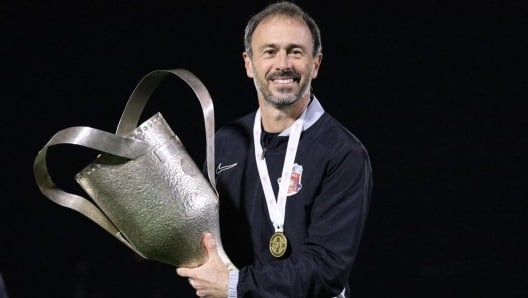
And with Dila Gori came his first two trophies as a coach.
”We won the Georgian Cup and Super Cup. I coached the most diverse and youngest squad of my career: thirteen Africans from thirteen different parts of Africa, Brazilians, Ukrainians, Georgians—all very young. The oldest player on the roster was born in 2004.“
How do you coach such a diverse group?
”Every coach has his own philosophy. I have a master’s degree in psychology, and I bring what I’ve learned from my studies into the locker room. I told my players, ‘Discover your differences and work on them.’ They did, and they’ve grown tremendously. Next year, we’ll be competing in the Conference League qualifiers.“
What’s your secret dream?
”I’m working toward going somewhere, but I don’t know where yet. I’d love to have a chance to coach a European club.”