Starting today, the world No. 26 is writing for us. A first-person account of life as a professional tennis player, filled with dreams, anxieties, and unique experiences both on and off the court. We begin with the off-season
In this golden age of Italian tennis, we’re lucky to have several top players alongside the king, Jannik Sinner. Athletes—young men who have a lot to share. Like Luciano Darderi, 23, world No. 26: Argentine by birth, but Italian by upbringing. Fresh off his best season yet, with a career-high ranking and three ATP titles. We asked him to tell us about his life on the tour; he agreed, and starting today, he’ll be writing his diary for us.
At the Tennis Premier League gala dinner in India, I met Alekh, the tournament announcer. I complimented him on the shirt he was wearing, with the typical Nehru collar, and from that moment a friendship was born. On the day of my departure, I received that very shirt as a gift, along with a beautiful message. A simple gesture, made by someone who has fewer financial means than I do, but who possesses enormous generosity. I promise myself to bring him a gift next time, as a token of gratitude. These are moments that stay with you, memories you carry in your heart forever. And it’s wonderful to share them in a diary with the readers of Sports Predictions: a fascinating idea I jumped at the chance to pursue.
For me, the off-season is all about travel. From Europe to Argentina, where I spend two weeks with my mother and family. Simple days, filled with relaxation and love, culminating in a charity exhibition in La Plata. Then, it’s time to pack my bags again. An endless flight from Buenos Aires to India, with a layover in São Paulo, then Dubai, and finally Ahmedabad. Twenty-four hours on a plane, anxious about missing my connection due to the IndiGo pilots’ strike and getting stranded in Dubai. Only at the last moment do I realize I’ll be able to leave. Tennis often begins long before stepping onto the court. India makes an immediate impression on me. A country that is both fascinating and incredibly harsh: so much poverty, so much misery, but also so much luxury. A world that constantly lives in contradiction with itself. Ahmedabad, the city hosting me, is immense.
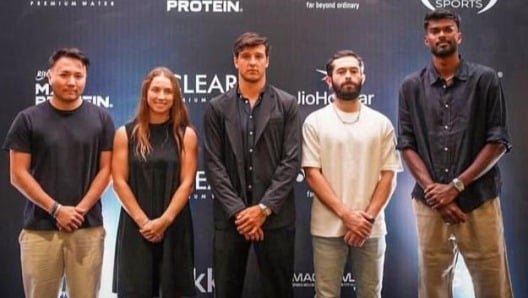
I arrive at nine in the morning, sleep for three hours in my room, then have a quick lunch and head straight to the court. The Tennis Premier League is an intense experience. The first day of matches begins with breakfast together, Indian music playing in the background, and a truly special atmosphere. Morning training: an hour and a half of fitness, two hours of tennis. Matches in the afternoon. I win the singles and mixed doubles. In the evening, there’s a dinner with sponsors and organizers: incredible turnout, genuine engagement. In India, you can feel the passion for high-level tennis, the desire to grow, to get closer to the major events on the circuit.
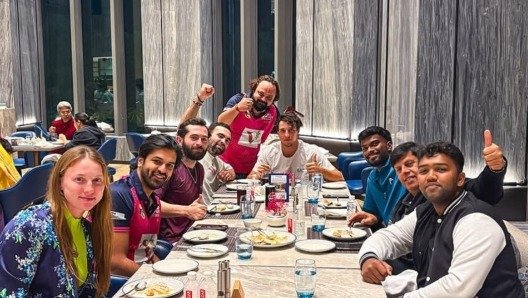
Not everything, however, goes smoothly. At lunch, I make the classic mistake: chicken tikka masala, extremely spicy. The result? I end up laid up in my room with terrible stomach pain and a match to play a few hours later against the Frenchman Muller. I can’t even stand up. I call my manager, Luca Del Federico, who rushes over to bring me an intestinal disinfectant to try to get me back on my feet. I take the court anyway, but I lose. One thing is clear: avoiding spicy food is practically impossible. From that evening on, I stick to a strict diet until the end of the tournament: grilled chicken and rice. In the morning I have a bit more choice, with omelets, avocado, and whole-grain bread. Only water in sealed bottles. The tournament ends in the semifinals, against the strongest team, the one that goes on to win the tournament. I leave with the feeling of having experienced something extraordinary. India strikes you with its contrasts, but above all with the generosity of its people. A week full of emotions and images that I already know I will never forget. Dhanyavaad India, thank you India.
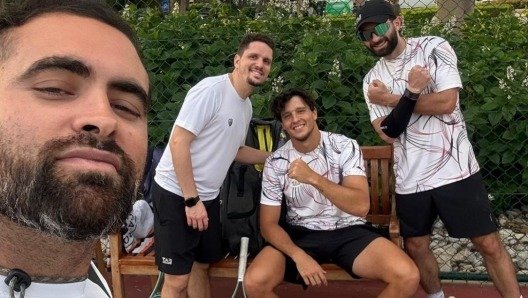
It’s during the return trip that the thoughts come. I reflect on the schedule for the coming weeks, on the organization, on how best to manage training, tournaments, and travel. Then I finish the first season of the Argentine TV series *En el barro* on Netflix. Off the court, I’m not a solitary person; I like being surrounded by friends. You need a bit of lightheartedness, because you can’t think only about tennis. Even though tennis, in the end, is always there, at the center of everything. I return to Dubai, where I’ve been living for over a year and where I’ll stay until the week before Auckland, the first tournament of the season. Here the real work begins again—the quiet kind. Joining assistant coach Giuliano Basile and athletic trainer Federico Berruezo is physical therapist Marcello Marini. My father Gino isn’t here: these days he’s looking after my little brother, Vito. I’m also training with Jannik Sinner. He’s a guy of few words and a lot of substance. Just training and hard work. The last time was during Roland Garros. Compared to the level of the matches in India, it’s a whole different story. The weight of the ball and the consistency in the rally make all the difference. I felt like I was on a spaceship that had left Earth and landed on Mars. Yes, Jannik is a Martian.
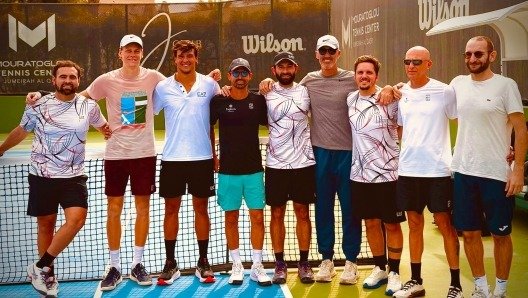
These are tests that are incredibly helpful for me to understand what I need to take my game to the next level. Over the past year, I’ve broken into the world’s top thirty; my goal for 2026 is to break into the top 20. It’s not an obsession, but a clear direction. I know tennis is a sport that demands enormous sacrifices, and I’m fully aware of that. But I’m not one to back down. If I have to run a marathon every day to be among the best, I’ll do it. If I have to climb a mountain, I’ll climb it. That’s just who I am. The season is about to begin. Always on the move, always traveling, always ready for new experiences. With a single goal in mind: to bring out the best in myself, every day.