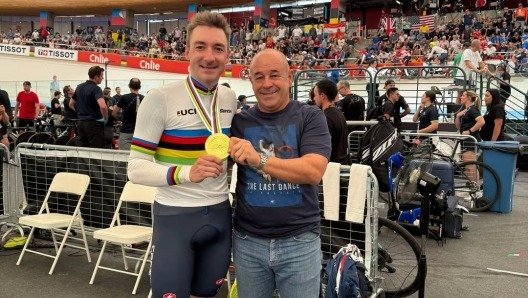
The Italian national team coach recounts the Italian rider’s triumph at the World Championships in his farewell race: “We grew up together, and Italy is now a well-oiled machine.”
His wife, Elena Cecchini, called him “the most incredible man I’ve ever known.” Matteo Trentin described Elia Viviani’s World Championship gold medal in the Elimination race on Sunday at the track in Santiago, Chile, as “orgasmic.” But how does Marco Villa, the Italian national team coach, describe it? “An anecdote? It would take a whole book…” Villa smiles calmly. The many years together, the growth, and the triumphs that led to the creation of “Team Italy”: Elia and Marco were a one-of-a-kind partnership. The days leading up to “The Prophet’s” competitive farewell—as he says “goodbye to cycling”—offer a chance to reflect on some of what happened, especially on the track, between Villa and the champion who had also mapped out his own golden World Championship finale. These emotions show no sign of fading three days after the farewell race.
Villa, let’s start right at the end.
“It was truly wonderful. Elia’s qualities and value were indisputable; it seemed he had no more surprises in store for us, yet what he’d dreamed of actually happened. He used to say, ‘It would be great to win the World Championship in the farewell race he chose himself’—a World Championship race, not just any criterium. He triumphed in the ultimate setting. After all, a year ago, when he was without a team, he kept telling me: ‘I don’t want to end like this; I don’t want to announce my retirement like this.’ In short, he chose how to end his career; he shaped it exactly as he wanted. That’s what you call making a dream come true…”
From the last Viviani to the first: what differences do you see?
“He’s always been mature. Ever since my first year as a coach, I saw a 19-year-old who knew what to do, who knew where he wanted to go. Sometimes I’d ask myself, ‘How can Elia be so confident if he hasn’t even raced in an elite World Championship yet?’ But he actually performed well, finishing second in the scratch race.”
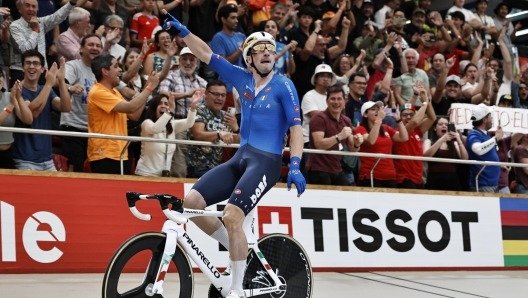
A difficult moment he’ll never forget?
“He’d prepared well for London 2012, and at the start of the final Omnium event he was in first place; then in the kilometer—which was for specialists—he finished sixth. Those were his first Olympic races; he started with a sixth-place finish but didn’t let it get him down. In fact, four intense and successful years followed, even on the road: Elia was winning, he gave his all on the road, and he prepared for the track races. He never skipped a training session, nor did he ever underestimate anything.”
Elia was winning, and you were building a great national team: was there a “Viviani effect,” and what was it like?
“Yes, between the Omnium, long and short races, and group events, he was a great help to me, allowing me to expand my pool of experience. I had been appointed head coach and hadn’t come from a school that taught how to win an Olympic gold medal in the madison. Elia was exceptional because, in addition to his talents, he gave me great feedback. The methodology we use now has become standard practice for the Italian national team; it originated from the late-night training sessions I did with Elia at the Montichiari velodrome, when no one else was on the track those evenings. Just him. Together, we figured out what was needed to bridge the gap between road and track racing. And I found him to be very receptive. It’s as if we’d trained together—we tailored the workouts to him. It was a shared journey of growth.”
By the way, what role do you see him taking on after his racing career?
“I see him succeeding in anything: he already has experience as a coach, and he’s always had excellent relationships with sponsors, who really like him. He’s great at promoting the brand.”
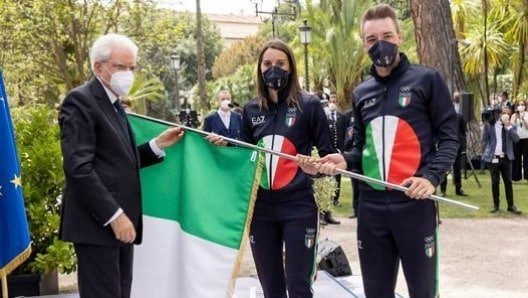
How did you experience the days together when Elia was the flag-bearer for Tokyo 2021?
“Lots of travel—he was on the move a lot—but Elia immediately took charge. He’d plan his appointments and commitments first thing in the morning. And that experience made him even more brilliant afterward. During the Tokyo period, he came first with me and then with Ganna, who was competing in the time trial. He trained with us on the road and on the track. He could have been part of the quartet, and in the end, he was happier than I was to see that gold medal around the other guys’ necks. Then he won a medal himself. I’ll say it again: he never got discouraged, but he participated fully in every aspect of team life. He’s always been a great leader.”
How did you experience that crash at Rio 2016?
“The Korean rider made a sudden change of direction. We had agreed that Elia would decide whether to change wheels or bikes—he already knew what to do—and he told the mechanic, ‘I’ll take the second bike.’ He went on to win. That, too, was his last race.”
A final memory?
“Lamon called him ‘the Prophet.’ The quartet improvised a celebration, but Elia was still there even after dinner, playing PlayStation with the quartet along with Scartezzini, who was in Italy. He stayed with them until the end of the game, past midnight. That shows just how much he felt the unity of the group. That’s why I say he’ll remain a role model for years to come.”
Will Italy be weaker without Viviani, just like when Nibali retired?
“Milan and Ganna also rely on him a lot; they often discuss with him how to handle certain situations. And that’s true for me, too. Before the World Championships in Rwanda or the Vuelta, they’d call us. He’ll always be one of us.”