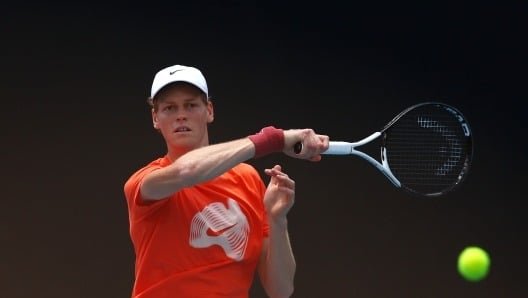
The former defender for Inter, Genoa, and Torino: “I used to stay at Lucio’s house in Sovigliana; he’s a very generous person as well as a great coach. I changed Mazzone’s mind: he thought I was a womanizer, then he called me a great professional”
Fabio Galante is a happy soul filled with a gentle cheerfulness, a natural disposition that serves as the background music to his daily life. He carries the sun in his pocket, in his trading cards—twenty years of faces, gelled curls, and five different jerseys—he smiles often, and says of himself that he is lucky “because if the Lord ever saw me on a sad day, he’d drop a pole on my head and say: ‘What more do you want from life?’” His father and mother, Giovanni and Maria, ran a sole factory in Monsummano Terme, the town where Fabio grew up; they made soles for shoes, and he went there to work as a boy too, and perhaps that is where he gets—as they say—his ability to keep his feet on the ground, his sense of discipline, and the awareness that the truth of a shoe lies not in the upper, but in the comfortable support provided by the sole.
Galante, you once said: “If I’d been uglier, I’d have had a better career.” Upper, sole. Outside, inside. Aesthetics, substance. We always fall back on that. What people see in us, what we are.
“I said it, and there’s some truth to it. Yes, I was handsome; back then I was dating girls from the entertainment world, but on Sundays, as soon as I made a misstep, the venom started flying: who knows where Galante was last night. It’s hard to shake off labels; I’ve always not given a damn, but certain comments hurt me. There was envy, too. Once I called a journalist who’d given me a 5 in his review. I asked him to explain the rating, and he replied, ‘What do you care about a 5 with all the women you have?’ I was floored—what kind of way is that to talk?’”
What was he like as a child?
“I played forward, I rooted for Inter. And I had a soft spot for Torino, because Ciccio Graziani was there. My dad used to tell me, ‘Watch how Graziani moves and copy him.’ At fourteen, I was in Empoli’s youth team: it all started there.”
You met Spalletti in Empoli.
“He was the veteran of the team; he was like an older brother to me. He taught me everything. I spent a lot of time staying at his house in Sovigliana with his mom, Ilva. I love Lucio. He’s an extraordinary coach and a special, incredibly generous person.”
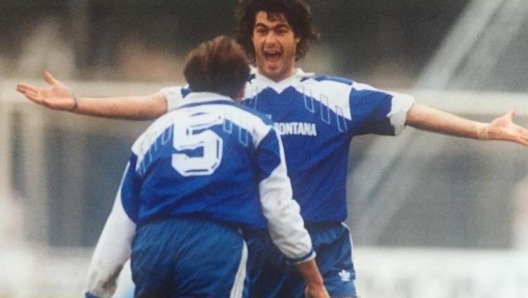
At twenty, Serie A with Genoa.
“To this day, I’m the highest-paid player ever in Serie C. Spinelli shelled out over three billion lire, then sold me to Inter for triple that plus Centofanti. I’ve always had a special relationship with ‘Sciù Aldo’; we were together for nine years—three in Genoa and six in Livorno. I pushed Alino Diamanti on him; I took him from C2 to Serie A. He said to me: ‘Damn, Fabio, does this guy go to nightclubs?’ And I said: ‘True, boss, but think about what he could do if he didn’t go.’ So he took him. I was to Diamanti what Spalletti was to me.”
It was Scoglio who launched him.
“The Professor had his superstitions; he’d spout slogans like ‘There are only 21 ways to take a corner kick,’ but he was ahead of his time. When he arrived midway through the season to replace Maselli, he said: ‘There are 18 games left; I’ve done the math: we’ll only lose two, so we’ll stay up.’ So what? He was right; we lost only two games and avoided relegation in style.“
How were your three years at Inter?
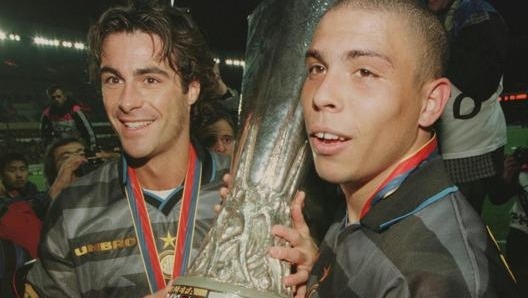
”Wonderful—a great team with a unique coach, Gigi Simoni. In 1998, we won the UEFA Cup in Paris, the first trophy of the Moratti era. I had the privilege of playing with the greatest of them all, ‘Il Fenomeno.’ In Moscow, against Spartak in the Cup, he scored a goal while dancing on the ice—he just pulled it out of thin air. And we said, ‘Our plays are working, right, Ronie?’ He had an appetite for everything—food and life. Once I went to visit him in Madrid during training camp; on the nightstand next to his bed were dozens of chocolates, pastries, and sweets. I said to him: “Ronie, but you have to play tonight…” And he, with his mouth full: “Yeah, right…” That night he scored a brace.”
Mazzone gave him the nicest compliment, didn’t he?
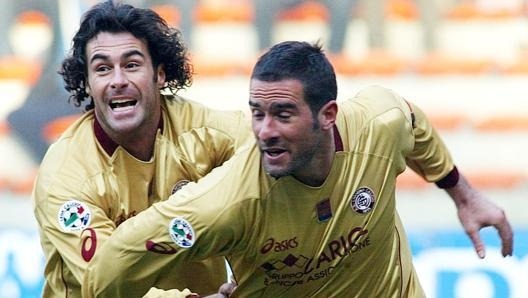
“Yes, in Livorno he said publicly that he thought he was dealing with a womanizer, but instead he’d found an exemplary professional. It was like a caress. I’ve always gotten along well with coaches, which confirms my professionalism. I got along great with Camolese at Torino and in Livorno: he was highly competent, but he got less than he deserved.”
Who was the strongest striker you ever had to mark?
“Should I list the strikers I’ve faced? Batistuta, Sheva, Del Piero, Totti, Mancini, Vialli, Vieri, Inzaghi, Montella, Di Natale, Toni, Gilardino, Lucarelli… Pippo was incredible: the ball sought him out, not the other way around.“
What were your strengths as a defender?
”I was clean in my anticipation, good in the air and at making runs, and decent at marking. And I’d break down opposing strikers by talking to them during the game (laughs)—I’d rattle them.”
Did you miss playing for the national team?
“A little bit—maybe I could have played in a few games—but I’m proud to be one of the three—me, Panucci, and Cannavaro—to have won two European titles with the Under-21 team.”
What are you doing these days?
“I’m a brand ambassador for Inter and a host on the new Radio-tivù Serie A channel. I’ve been with Francesca for ten years—she’s a wonderful woman. We love to travel; we’ve even gone around the world, from Japan to California. Oh, one last thing: we’re hoping to expand our family soon…”