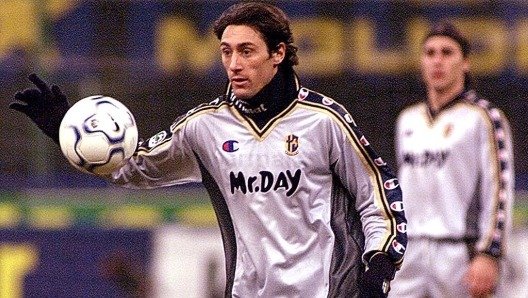
The former midfielder recounts his life on and off the field. “Matteo fought so hard; to me, he remains an inspiration. My greatest joys came at Lazio; I’m disappointed by how it ended”
From the outside, people often perceive soccer as a world apart—golden, perfect, free from everything, even pain. Even if a player has always led a quiet life, never going overboard, he is seen as a privileged individual belonging to a different dimension than “normal” people. But then there are tragedies that bring everyone back down to earth. This is what happened to Diego Fuser, a former midfielder for Torino, Milan, Fiorentina, Lazio, Parma, and Roma with over 400 appearances in Serie A. He was never a superstar or a cover star—even though some called him a “rebel” when he was young—and in 2015 he experienced the greatest pain a father can face: his son Matteo passed away at age 16 after a long illness. “It changed my life, devastating it forever. It’s something that leaves a mark inside you, hard to explain. You try to accept it but look for answers that don’t exist.”
Diego Fuser, let’s start from the beginning. You got your start in big-time soccer playing in Torino’s youth teams while rooting for Juve. Quite a paradox. Was it your dad’s fault?
“Yes, he used to take me to the stadium. I went every Sunday until I was in the youth team, then I stopped. My idol was Tardelli; I absolutely loved the way he played on the field.”
Then, over time, you became a Torino fan?
“Yes, starting in the Primavera. After all, when you play against Juve, you realize a lot of things and you can’t root for them anymore.”
In 1989, Milan signed you. First with Sacchi and then with Capello—any regrets?
“The first year, maybe I wasn’t at the right level. The second year, though, after my loan to Fiorentina, I returned to Milan convinced I could make my mark. Capello, however, tried Gullit as a right winger during training camp and it worked, so Ruud played there almost the entire year. And in June, I asked to leave.”
Was Zoff the one who wanted you at Lazio?
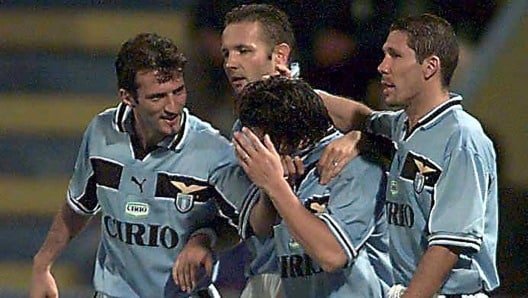
“That’s why I chose the Biancocelesti. They were four wonderful years; I had the honor of wearing the captain’s armband and lifting trophies. It’s a shame how it ended…”
Did you expect to be treated differently?
“After all the success we achieved, yes, I think I deserved it. I was let go as if I were just one of many. Let’s just say the suggestion came from someone who wasn’t the coach but acted as if he were.”
Who are you referring to?
“It’s no secret that Mancini had a lot of power at that Lazio. Eriksson listened to him a lot. They let me, Signori, and others go. They had other plans.”
Did you ever speak with the Swede?
“He told me that if Parma offered me more money, I should go. Lazio did nothing to keep me.”
Then, three years later, you decided to return to Rome, but to play for the Giallorossi. How did that go?
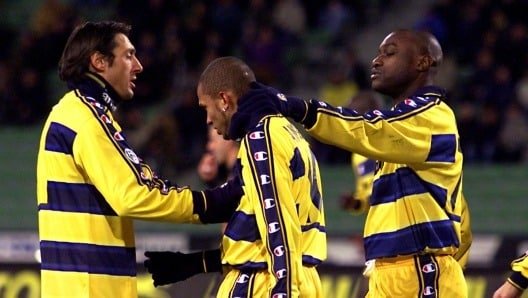
“Before the Roma-Parma match, the last of the season, Capello approached me during warm-ups and asked if I would go play for them the following year. I said yes immediately. Then, a few weeks later, we finalized everything.”
A real blow for Lazio fans…
“I’ll say it again, I didn’t expect to be treated that way. I’m attached to the Biancocelesti; we had some wonderful seasons together, and I would never have gone straight to Roma. But I’d spent three seasons at Parma—I didn’t imagine it would spark so many negative reactions. Fans often don’t understand that for us, it’s a job. I respect and understand the passion, but I think that every now and then, a little respect is needed for those who gave you everything. Can you believe that Lazio has never invited me to the Olimpico…”.
Do you have any regrets?
“Not regarding my choices. I have one regarding the national team: not being called up for the 2000 European Championship really hurt me.”
Zoff was on the national team bench. It would have been the perfect way to come full circle…
“I’d played every qualifying match, just like with Maldini two years earlier. But with Zoff, the relationship was different. I’d been injured, but I was recovering and I told him so; he decided not to take me anyway. It’s a wound that has never fully healed.”
You were talking about Roma; things didn’t go nearly as well there as expected. Why was that?
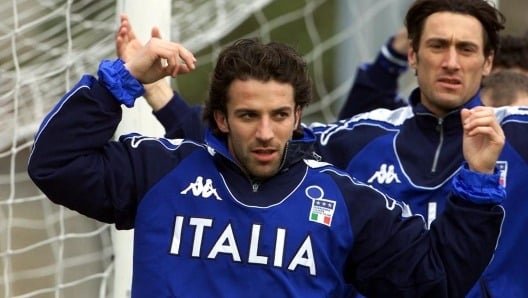
“ The first season was very positive. We came close to a second consecutive Scudetto and played in the Champions League. The following season, however, there were some misunderstandings with the club. I didn’t play much, but my mind was already elsewhere. I was starting to have problems bigger than soccer.”
Was it during that period that you discovered Matteo’s illness?
“ Yes, I’d skip training to rush to my son. I’d leave and spend the evening at the hospital with my wife. We fought hard. Matteo did too. Unfortunately, there are circumstances where no one can do anything.”
It was a tragedy that shook the world of soccer. Fourteen years have passed—how has it changed you?
“ In so many ways, believe me. It was an event that turned our lives upside down, devastating them forever. It leaves a mark inside you; it’s hard to explain. You try to accept it, but you look for answers that don’t exist. I don’t think there’s any pain greater than the loss of a child. Nothing has been the same since. At the same time, though, his example has given me so much strength; we live for him every day.”