“The Beast” Opens Up: “At Roma, they remember the mistakes and not the bicycle kicks; people talk without knowing. At one point, I was a starter for Brazil but not for Roma. I saw Totti cry over Franco Sensi. I could have gone to Milan and then to Inter, but I was too expensive, so they signed Sneijder…”
Say Julio Baptista, and you think of bicycle kicks, masterful plays, and the Rome derby decided by a header into the top corner. “The one I scored against Lazio is just as good as the goal at Camp Nou that knocked out Barça.” But then there’s also the other side of the coin: the struggles in recent years at Roma, the insults that later became memes, the iconic commentary. “I’ve read and heard a lot of bullshit about me. A lot of people, especially in Italy, feel free to talk without knowing anything.” “The Beast” responds from Madrid, where he’s studying to become a coach. He opens the treasure chest of memories and lets himself go. One Polaroid after another, in sequence. Mourinho’s interest, Galliani’s advances, the four goals he scored against Liverpool—complete with a standing ovation from the Anfield crowd.
Julio, let’s start with your Italian adventure. Just a few days after your arrival, Roma president Franco Sensi passed away. What memories do you have?
“I found myself carrying his coffin on my shoulders. Totti explained to me that Sensi was Roma. And he was crying. He, like so many others. It was a form of love I’d rarely seen among fans; it made a deep impression on me.”
Things went well in the first year. A great rapport with Spalletti, the goal in the derby, the bicycle kick against Torino.
“I pulled off a lot of great plays, didn’t I! Joking aside, yes, it was a good season. I would have gone to war for Spalletti—he’d put me at the heart of his system. I owe him a lot.”
A quick flashback to the derby? It was your first one, and you scored right away in front of the Sud stand.
“It was crazy. Totti crossed it, I headed it in, and it was a goal. That’s how we won. I remember the crowd going wild. In Rome, they’re crazy… in a good way. But for me, that goal in the derby is just as valuable as the one I scored at Camp Nou against Barcelona. There, too, I was decisive.”
His time in Rome, however, ended amid difficulties and criticism. How did it go?
“I felt a bit betrayed, to tell the truth. I was in good form, I was playing for the national team, and I was the best player on the field. In Rome, though, I wasn’t playing. Ranieri didn’t really see me. And he never took me aside to give me an explanation—never a word of clarification. Too bad. I left because I needed a fresh start.”
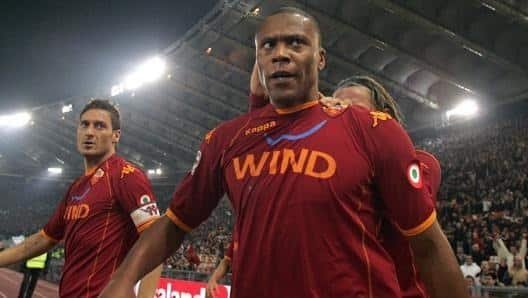
If you search for his name on YouTube, you’ll see how it’s associated with iconic commentary clips of his mistakes while playing for the Giallorossi. That “Julio, go away” has become famous among the fans. Have you ever seen it?
“No, and I don’t give a damn. I’ve read and heard a lot of bullshit about me. I was going through a tough time, when I lacked confidence and couldn’t play like I used to. I understand the desire to become ‘famous,’ but you need a little respect. A lot of people, especially in Italy, feel free to speak without knowing the facts.”
Overall, how would you rate your time with the Giallorossi?
“If I look at it from every angle, I’d say those were important years. Of course, I’m sorry we didn’t win the Scudetto and that it ended that way. It seems like some people remember my mistakes more than my bicycle-kick goals. Does that seem fair to you? Maybe someone should be told to do their job better and convey information more effectively…“
Now let’s rewind a bit. Sevilla took you to Europe. Did we see the best Julio there?
”Yes, I’m attached to all the teams I’ve played for, but Sevilla will always be special. I scored 47 goals in two years—I was a powerhouse. That’s when they started calling me ‘The Beast.’ Half of Europe was after me.”
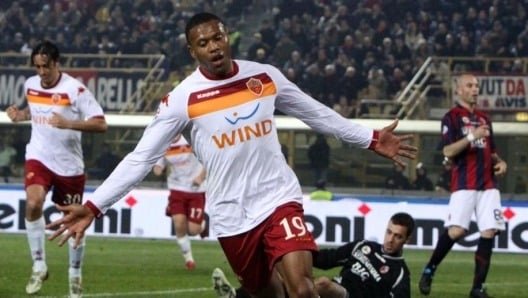
Among the contenders, Real Madrid’s “Galacticos” came out on top.
“A crazy team—it was hard to find a spot. Capello was on the bench; up front, the duo was Ronaldo and Raúl, with Zidane, Beckham, and Figo behind them.”
Then he chose Arsenal, on loan, to get more playing time. He’s one of the few players in history to have scored four goals at Anfield—did you know that?
“I didn’t know that, but I know it was an incredible night. I scored four times and we won 6–3. When I was subbed out, the whole stadium stood up to applaud me. I looked up and saw a sea of red. A stand like the Kop paying tribute to you—especially as an opponent—gives you goosebumps.”
Let’s talk about those “sliding doors” moments. There are at least a couple to mention, both leading to Milan. The first was due to a wish from Galliani…
“It was 2007; I’d just come off two so-so years between Madrid and London. I know Milan wanted me. In the end, though, they signed Pato and I went to Roma. And to think that in May of that year, they won the Champions League…”

The Champions League victory going to where you were supposed to end up seems to be a constant in your transfer saga. In fact, something similar happened even before Mourinho’s Inter won the treble. In that case, was the only thing missing the signature?
“We were really very close, yes. There was even a call with Moratti; Mou liked me. Then nothing came of it: Roma wanted more money. So Inter went after Sneijder, my former teammate at Real. Too bad—maybe with one of those two teams, I could have won a Champions League title…”
Finally: your future as a coach. You’ve said in the past that there are fewer opportunities for Black coaches. Do you think it’s because of racism?
“I don’t know. But it’s a fact. How many Black coaches do you see in the top five leagues? I see very few. I’d like to think it’s just a coincidence, but unfortunately, I don’t think so. There are fewer opportunities. Still, I hope to be the one to reverse the trend—never say never…”.