
The former Juventus star opens up: “Baggio used to call me ‘Geppetto.’ When Barbara died, I left soccer to be with my kids; I cried alone to show how strong I was. Now Lucia has given me a new lease on life.”
Moreno Torricelli’s story is that of a man who made friends with the wind’s slap, suffering and cherishing the precious gift of tenacity. First in pain, then in rebirth. In the many silences, he discovered the secret of a new beginning, learning how to straighten that crooked wood we call life. “Misfortunes happen to everyone, not just to me; it depends on how you face them and how you react.” Torricelli won it all with Juventus, coming up from the amateur ranks. A gamble won by Trapattoni. He was a carpenter; he turned out to be a Serie A soccer player. Then, after retiring, he had to face the tragedy of his wife Barbara, who passed away in 2010. A sudden onset of leukemia took her away. “For many months, while we were fighting the disease, I tried to reassure everyone; I kept so many things bottled up inside. I didn’t want her and our children to lose hope.”
Torricelli, let’s start from the beginning. Your arrival at Juventus seems like the fairy tale of a man blessed by fate. Tell us about it.
“I was 22 and playing in the amateur leagues. In the mornings I worked as a carpenter in a furniture factory, and in the evenings I went to train. It was 1992, and Juve had many players away with the national team on a promotional tour for the World Cup in the U.S., so they called me and some other guys in to play friendly matches. For me, just being there was already a dream. Trapattoni liked me; he first chose to take me on tour to Japan with them and then gave me my league debut. ‘If they don’t sign Vierchowod, I’ll go with the kid,’ he said. I owe him everything. He had the courage to start a complete unknown in Serie A.”
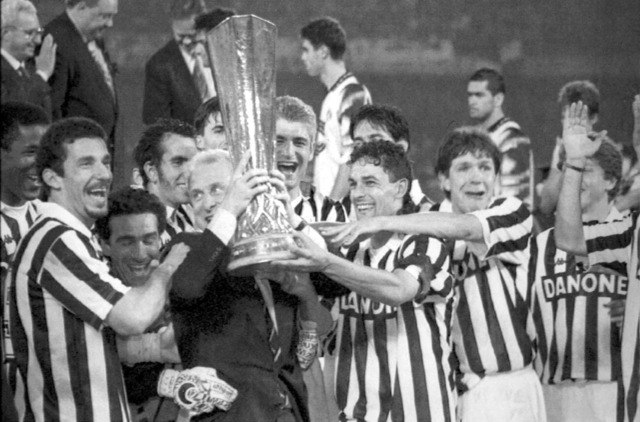
And how did the locker room receive you?
“Well, they’d read the story in the papers too. Can you believe that Baggio, just for fun, called me ‘Geppetto’? And I’m still nicknamed that today. To Trapattoni, who’s from Brianza like me, I was ‘legname’—meaning ‘carpenter’.”
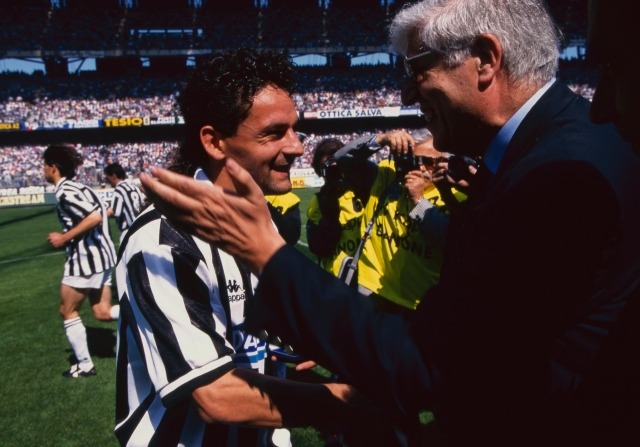
Let’s talk about a young kid walking into a locker room packed with champions: was there anyone who intimidated you a bit?
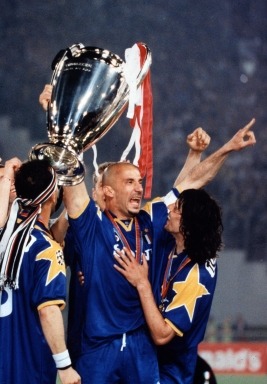
“At first, yes, I was a bit shy. It wasn’t my world; I had to get used to it. Just think, in three months I went from a salary of 2–3 million lire to one of eighty. For example, I was a bit intimidated by Vialli’s personality; we’d arrived together: he as an Italian champion with Sampdoria, me as a nobody. Then, over time, we became friends. I remember he didn’t like driving, so I’d pick him up every morning to take him to the field. He was like a brother and a great captain.”
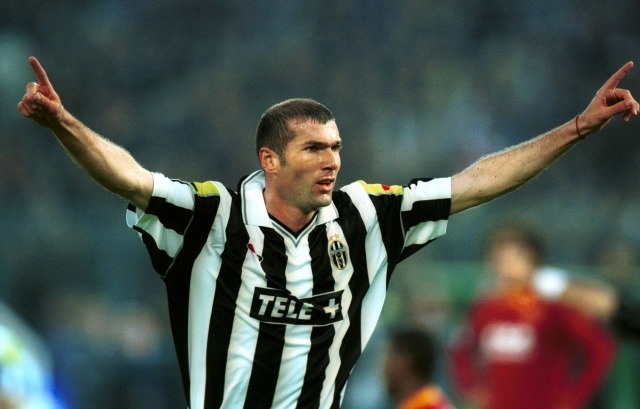
There was also a certain Zinedine Zidane.
“Zizou arrived later, met with some skepticism from TV and newspapers. We had sold Vialli and Ravanelli and were coming off a Champions League victory. I didn’t know Zidane, but at the first practice we were all left speechless. Veronica, two dribbles, and off he went. It was mind-blowing. We looked at each other as if to say, ‘What planet is this guy from?’”
Even though his favorite remains Del Piero.
“Of course, for me he’s a cut above the rest… and not because I’m biased. Alex and I spent a lot of time together, since we were among the youngest in the group. He, however, was already a champion. Juve had paid a lot for him; everyone talked about him as the future of Italian soccer. We hit it off right away; he was always at my house. My wife, who was a hairdresser, even cut his hair. He stayed for dinner so many times—we had such a good laugh.”
Yes, Barbara. An illness took her away at 40.
“A terrible form of leukemia. The worst part was having to explain it to my children. They were 15, 11, and 10 years old. The doctors told me right away that the situation was serious, but at first I chose not to say anything to the family. I didn’t want them to lose hope.”
And you, on the other hand, did you ever lose hope?
“I kept a lot bottled up inside; I pretended on many occasions and endured on others. I cried alone; at home and in the hospital, they needed to see me stay strong. It was a 10-month ordeal. Only in the final days did I break down and tell my wife what her condition really was.”
Soccer gave you so much, then life took its toll with interest…
“Misfortunes happen to everyone, not just me. It depends on how you face them and how you react. In soccer, I lived a fairy tale, winning so much with Juve. Off the field, I had Barbara, with whom I spent 20 wonderful years and had three amazing children. I have no regrets, nor do I feel any remorse.“
After his wife’s death, he chose to walk away from soccer entirely. At the time, he was coaching, but he turned down several offers…
”Yes, I had a major offer from Crotone in Serie B, but how could I have accepted it? Losing their mother was already a huge blow for my children; imagine having to move house, change cities, and lose all their friends. Now I’d gladly return to the bench, perhaps starting with the youth teams.“
What does Torricelli do for a living today?
”I’ve gone back to doing what I did as a kid: carpentry. I help out a local craftsman here in the Aosta Valley, and I enjoy building the mountain pasture for my new partner, Lucia. She’s been instrumental in my rebirth; she’s given me a new lease on life, tiptoeing into my world. She’s also been very sensitive with Arianna, Alessio, and Aurora. To them, their mom is and always will be their mom.”