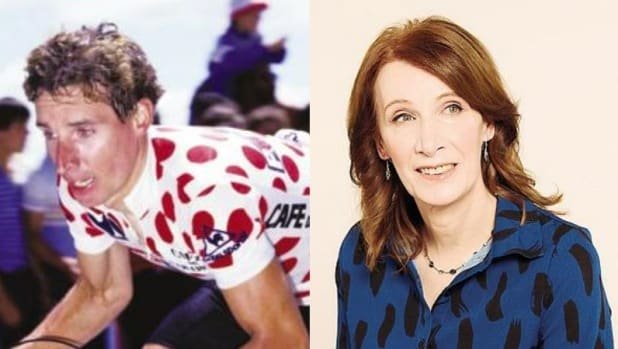
A former cyclist, winner of the polka-dot jersey at the Tour de France and runner-up in the 1987 Giro d’Italia, she completed her gender transition after retiring: “First I hit rock bottom, then my children grew up, and I decided to come out.”
Philippa York is now a writer so highly regarded that she won the William Hill Sports Book of the Year award in the UK for her book “The Escape,” co-written with David Walsh. She recounts her life, including the time she was Robert Millar, a cyclist for 15 years who won the iconic polka-dot jersey at the 1984 Tour de France and finished second in the 1987 Giro d’Italia. A climber who challenged not only the chaos of the peloton but also the inner conflict that led him to choose to become Pippa York.
Pippa, how would you describe the cyclist you used to be?
“As someone very different from the person who came home to my family. When you’re good at something public like cycling, people have an opinion of you—one that doesn’t reflect who you really are.”
How does he look back on his successes?
“The result was important, but I especially loved the competition: I wanted to have a say in how the race would go; I wasn’t content to just get dragged along by the pack. If I could make a difference, I’d accept any result.”
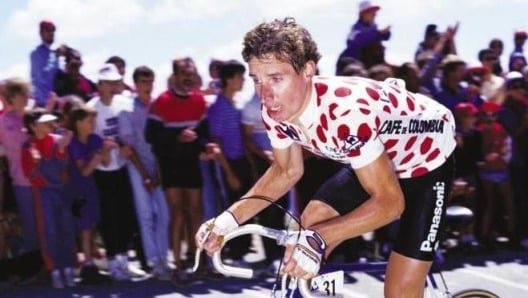
What did you like about racing in Italy?
“I loved the Milan-Sanremo. Once you left the flatlands, you climbed the Turchino: on the other side, the sun came out, you saw blue skies, and you could breathe in the sea air. In that race, it felt like being in a 300-km-long stadium, one where you raced through places you’d seen in old photos—where that great champion had a flat tire, where that other one had attacked. I loved it.“
Your funniest memory from a race?
”The 1987 Giro. We’re climbing, rain and wind, in a tight group. At the top, every team except mine had someone there with a jacket and hot drinks. There were the Carrera guys for Stephen Roche and Roberto Visentini: I’m behind Roberto, I see them passing him a water bottle but he doesn’t want it. So I reach out and take it myself. I asked Roberto first if he wanted it; he shook his head no, so I drank it: it was hot chocolate, mixed with something I think was grappa. I took a big gulp, then drank the whole thing. Wow, what a feeling… Right after that, there was a descent through low clouds: I thought I was in a dream, because of all the alcohol I’d drunk. I don’t even remember how that stage ended.”
What was the team like back then, between the drive to be among the best and your inner conflicts?
“I figured out early on how to hide my emotions—you must never show them during a race. The team was a jungle; cycling is a strange sport—individual yet a team effort—where everyone was your rival. I liked being in that extremely hostile environment, seeing how everyone reacted to the pressure: some remained silent, others got angry. The excessive masculinity stemmed from the fact that there wasn’t much diversity: all Westerners, all united by speaking the language of the group, by those unwritten rules that no one explains to you unless you make a mistake.”
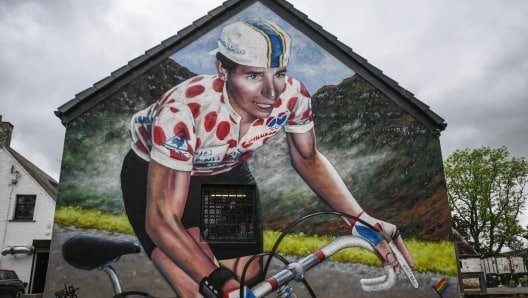
How do you feel when you see photos of Robert Millar on a bike?
“I’m not ashamed of who I was; in fact, I think I should be grateful for having stayed healthy and able to compete.”
You described your retirement as the beginning of your “Escape,” your escape.
“First of all, I had to hit rock bottom: I struggled with depression—it happens to people who transition. I think the first five years after I quit were the worst of my life: it wasn’t just what I was feeling inside, but also the end of my career, the doubts about what would keep me going.”
What gave you the courage to live openly as Pippa?
“I was no longer a public figure. I’d had enough of cycling; I wanted to be something else and be left in peace. When I started writing, however, I was still using my old name, Robert Millar, and I didn’t think that was right for me anymore: privacy had been important, but the time came when I no longer needed it. It was a combination of things: the kids had grown up and no longer needed protecting, I’d been asked to appear on TV, and I wanted to write under my new name.”
Today, you comment on cycling: how much has it evolved since you were racing?
“I think it has evolved more slowly than society in accepting diversity, for example. Today, however, there’s no longer the hatred for your rivals that there was in the past: they’re more like friends, they have more respect for one another as human beings. When I was racing, there was more rivalry. From a technical standpoint, I think many things have improved, but the tactics, the dynamics of how the peloton moves, are still the same: the strongest rider is at the front and the others behind.”
Is Tadej Pogacar the strongest?
“When I look at him, I see someone who enjoys the fun and competition without having to carry the same burden that Remco Evenepoel carries, who has to race with the legacy of Eddy Merckx and everything that Belgian cycling represents. I think cycling has only recently become a full-time job for Pogacar, partly because he’s so physically strong that I don’t think he’s been pushed to 100% of his abilities. He needs a rival, someone on his level. In the peloton, there’s no longer the kind of rivalry we were used to, like Moser versus Saronni. Who knows, maybe it’ll happen.”