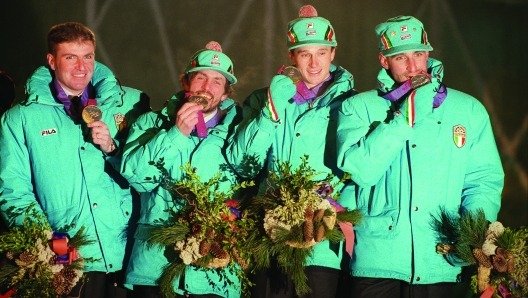
The organizing committee and CONI are passing the blame back and forth, but too many Olympians are missing from the list: from Albarello to De Zolt and Vanzetta, from Paruzzi to Giorgio Di Centa and Piller Cottrer
Hosting the Olympics has its own magical aura; it combines pride and exceptionalism, but above all, it offers the country great opportunities. Here are those opportunities. If we listen to the institutions, the Games are—rightly so—a great opportunity to showcase Italy to the world. Then there’s the opportunity for a legacy—one made up of infrastructure and sustainability that’s meant to last. There’s the athletic opportunity to have Italian athletes who have already qualified in every discipline. And then there’s the opportunity to experience a moment of excitement and recognition for what they’ve achieved in their careers while representing Italy. How? The simplest way—which is also the most controversial—is this: being chosen as a torchbearer. This is an important honor, yet several athletes who won gold medals in past Winter Olympics have not received this call. And so they are left watching this long lead-up to February 6, the date of the Opening Ceremony of the 2026 Games.
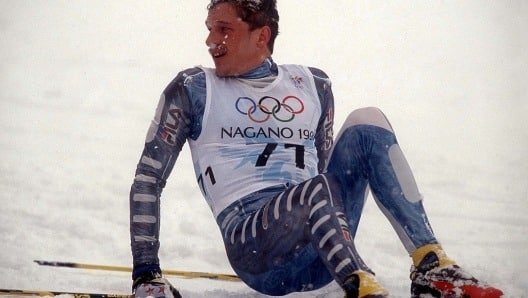
Take Silvio Fauner, for example—gold medalist in the 4×10-kilometer relay at Lillehammer in 1994—who spoke about it in a lengthy interview. Carrying that flame isn’t about showing off, at least not for an athlete. That light jog with the torch in hand—for those who have dedicated their lives to sports—is much more than a parade; it’s something that has to do with endless training, challenging oneself, the tension of the performance, and the boundless thrill of a historic victory. Or at least one that was thought to remain historic, but which seems to many to have already been forgotten. The feat of those four in the Norwegian freezing cold—which even spoiled the party for King Harald, who had come along with 150,000 other people to cheer on his quartet—was overlooked. Only Marco Albarello carried the torch back to his native Val d’Aosta; for Maurilio De Zolt, Giorgio Vanzetta, and Silvio Fauner, nothing. The same goes for Giorgio Di Centa, Pietro Piller Cottrer, and Gabriella Paruzzi. Not to mention the Ghedina case—though he is not an Olympian, he carries significant weight, especially in Cortina, and fortunately, the matter was resolved with a happy ending. Yet the Flame’s journey was long, and there were many torchbearers—10,001 of them. Is it possible there was no room for them? Of course, some Olympic gold medalists were called upon—from Deborah Compagnoni to Enrico Fabris, from Franco Nones (Grenoble 1968) to Manuela Di Centa, all the way to Stefania Constantini, the “queen of curling” at the Tokyo Games (excluded from the list of flag-bearers by CONI). In short, the torch is for many but not for everyone.
Whose fault is that?— It’s only fair, then, to ask for an explanation. The Milano Cortina Foundation, which manages the selection of torchbearers in collaboration with Coca-Cola and Eni (which have their own representatives—many with ties to the entertainment world but also with an eye toward social issues), regrets the disappointment felt by so many champions, but also makes it clear that, when it came to involving certain historic figures from Italian sports, they were, in a sense, relying on CONI. In what way? In the selection of the final torchbearers for the evening of February 6. Officials at Palazzo H initially respond that the Olympic Committee selects only the flag bearers for the Opening Ceremony, while everything else is the responsibility of the organizing committee. They then expanded their role to include the list of those who will pass the flame during the finale. In fact, the first athletes in Greece were chosen by CONI President Luciano Buonfiglio and his staff: Stefania Belmondo and Armin Zoeggeler were joined by Filippo Ganna and Jasmine Paolini—in other words, Winter Olympians alongside Summer Olympians. The same will happen during the final leg of the journey. Could Fauner and the others be chosen as a surprise for the final, most prestigious leg of the torch relay? The answer is clear: no. CONI has made it known that the selections have already been made; there’s no point in creating false hopes. How many there will be is unknown; even asking the question is made to seem inappropriate.
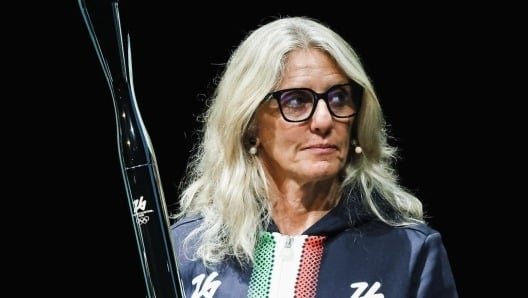
TV and social media— It’s best to simply point out that—perhaps due in part to the massive (but necessary) involvement of sponsors—sports, and winter sports in particular, have been neglected, to say the least. The dynamics are complex, as we know, but how can one disagree with a champion like Fauner when he points out the presence of Sarabanda’s “Cat Man”? And one cannot help but notice the seemingly endless stream of influencers in their standard Olympic tracksuits, who certainly help the Games’ social media accounts rack up impressive numbers, but who have very little to do with the Olympic spirit. Curtain.