Isolde, a former world champion, runs a chalet in Selva di Val Gardena: “I’m the jack-of-all-trades—I’m in the kitchen and I take tourists skiing. Today’s Italian women’s team isn’t any stronger than we were. My kids? One is a chef, one helps out, and the youngest wants to be Ronaldo”
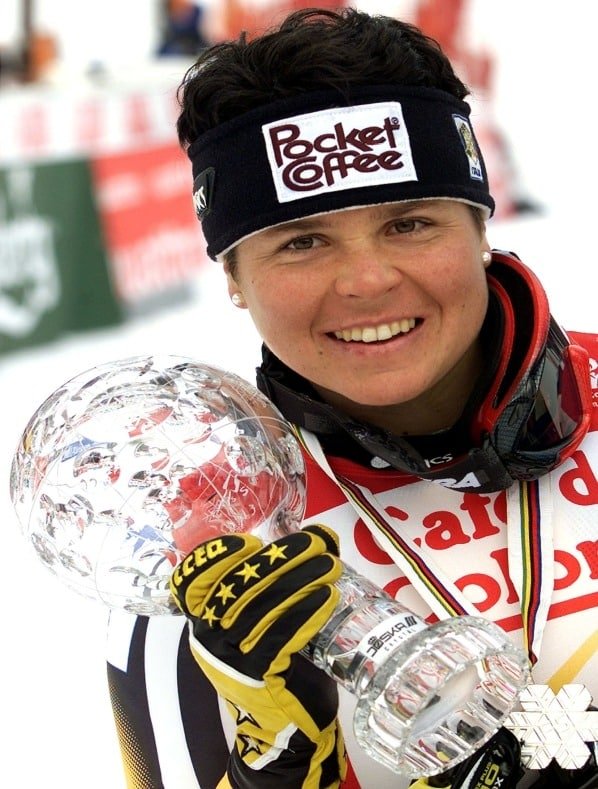
Three Olympic medals, three World Championship medals, 15 World Cup victories, 51 podium finishes, and winner of the Downhill World Cup in 2001 and 2002: Isolde Kostner was among the fastest female skiers in the world. Now she’s a successful entrepreneur.
Isolde, what have these first 50 years been like?
“Not boring at all. I had a wonderful childhood, with parents who gave me freedom: in the summer to play in the woods and meadows; in the winter to ski, cross-country ski, play ice hockey, and skate. We could still go sledding on the streets.”
Then came my years as an athlete.
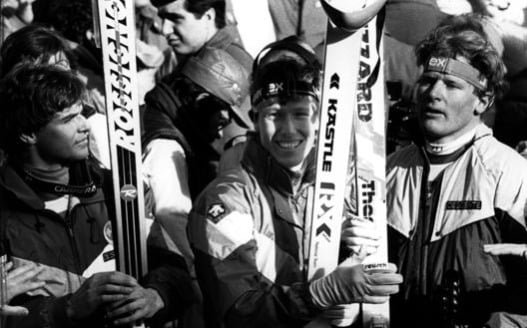
“I started training seriously at 11 and stopped at 31. I fulfilled the dream I’d had as a child—to ski on TV one day. My mom was a huge fan; she watched every race. And so was I—my idol was Zurbriggen. It wasn’t skiing that was my passion, but sports in general: volleyball, cycling, rock climbing, mountain hiking, swimming, and cross-country skiing. I learned so many things: always being around so many people from different places and different families really enriched me.”
Who is Isolde Kostner today?
“I’m a mother of three children, ages 19, 17, and 9. And I own two businesses: the B&B where I got married, the Garní Residence Soraiser in Selva di Val Gardena—which belonged to my husband’s family—and, for the past three years, the luxury chalet Vilaiet in Ortisei” .
She’s still in touch with many people.
“Tourists don’t stay more than a week; the nice thing is that they’re on vacation, so they’re generally more relaxed. But watch out if there’s no Wi-Fi…”
What is your role?
“At the B&B, I’m the jack-of-all-trades: if we’re short a housekeeper, I step in; if my husband isn’t around, I make breakfast—I’m wherever I’m needed. I take care of the gardens, spending whole days tending to flowers and pruning bushes. And then there’s the laundry and making the beds. At the chalet, on the other hand, I welcome guests and take them skiing one day a week.“
Where does someone who lives in Val Gardena go on vacation?
”We look for warmth; we go to soak up the sun.“
Your favorite time of day?
”I’m a morning person. My clearest memory from my competitive days is the mornings on the glaciers; we’d go very early, before 5 a.m., when no one else was there yet, and we’d watch the sunrise.”
Do your children help you?
“Our second child helped us a lot from a very young age, but as a teenager he lost interest. David, the oldest, wants to be a chef and is working in Selva in the kitchen of a Michelin-starred chef. The youngest, for now, wants to become Cristiano Ronaldo.“
This year your oldest son turns twenty—how does that make you feel?
”Incredible. Life goes by too fast. In 2024, I celebrated the 30th anniversary of my first Olympic medal, and I couldn’t believe it: how on earth have thirty years already gone by?”
Are your children different from how you were at their age?
“Different, yes. I was already very meticulous at age 11—a perfectionist—and I always did more than what was asked of me. They aren’t that determined. The little one plays the accordion, but he’s not obsessed with it. For now, he’s into soccer—we’ll see in two years.”
What kind of mom are you?
“Very much like my parents. I’m not afraid—when they were little, I’d send them to the toughest slopes; I’d write my phone number on their helmets, but they always came home safe and sound.”
As a wife? Are you jealous?
“No. If he were to find someone he likes more than me, so be it. Maybe I say that because it hasn’t happened yet.”
Was it easy to stop competing?
“Yes, because in 2004 I’d taken some time to decide—I’d chosen to continue only until the Turin Games. I was ready to quit. Then in December I found out I was pregnant, so I just stopped sooner.”
You skipped the Olympics because you were expecting a baby—how did the federation take it?
“They probably didn’t take it very well, but by then it was a done deal.”
You won five times on the Olympia delle Tofane course in Cortina.
“It was really my course. I used to think Lindsey Vonn was unbeatable, but now I’m not so sure.”
Are today’s Italian women’s team members stronger than you were?
“I wouldn’t exactly say so. You just have to think back to all our rivals.”
What did the Olympics mean to you?
“Lillehammer was a dream. I was 18, I’d just won my first race, but I was calm, with no pressure at all. I told myself: I’ll go down the course, give it my all—if I finish 30th, that’s fine; if I make the podium, all the better.”
You always seemed so calm.
“Actually, I had stomach problems: I’d convinced myself that was my weak point, but since I retired, I haven’t had any issues at all. Apparently, it was just nerves.”
Her first race?
“In first grade, at school—a mini-giant slalom. I came in second behind my dearest friend Christine Gruber.”
Her best quality?
“I’d say balance. Even when I get angry, I never overreact.”
Do you have a dream you haven’t yet fulfilled?
“Unfortunately not—I don’t have any big dreams like winning competitions anymore. But I’d like to encourage people aged 50 and older to get involved in sports. It’s very important; it’s good for your health.”
Is there anything that scares you?
“Certain politicians give me cause for concern.”
Are you happy?
“Yes. After turning 50, I’ve found more inner peace. I’ve always been very meticulous—I wanted everything to be perfect. I’ve learned to take things more philosophically.”