Inter’s Primavera coach in the Youth League quarterfinals: “As a player, I made a mistake by leaving too soon. Now I’m dreaming alongside my boys: there’s talent in Italy, too”
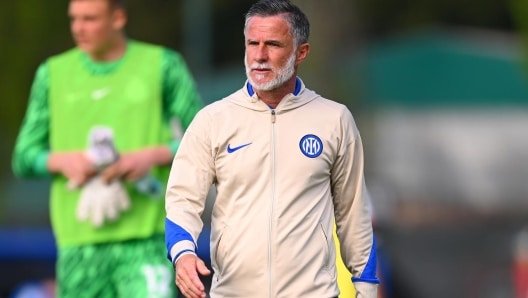
From Calabria to England, from Bagnara to Sheffield, Birmingham, or Middlesbrough—the possibilities are endless. Benito Carbone, known as Benny, is now the 54-year-old coach of Inter’s European-minded Primavera team—tomorrow they face Benfica in a single-elimination quarterfinal for a spot in the Youth League Final 4—but long before that, he was a pioneer: after leaving the Nerazzurri as a player, he crossed the Channel with the spirit of an explorer. He made his mark in the rough-and-tumble Premier League of the mid-90s and early 2000s, when attacking midfielders like him were almost like chosen spirits among powerful defenders.
Carbone, did you expect this boom for Inter’s Primavera?
“Yes, because we’re Inter. Here, we have to go as far as possible in every competition, fostering the boys’ development. You set your goals, but in the end, it’s always the pitch that speaks.”
What kind of team is Benfica?
“Strong, with five or six top-tier players ready to compete at the highest level. But Betis were at that level too, and yet we went head-to-head with them and moved on. Let’s enjoy it—there’s nothing better than engaging with different cultures. In any case, I don’t think our football movement is lagging behind: that’s just talk because the young talents are there. The point is that we need to be braver in giving them playing time; in this regard, Inter is ahead of the curve.”
In fact, Inter is currently focusing on young players at all levels.
“It’s a goal of the ownership, and rightly so. Inter must continue to have a strong youth academy, as always. With the U23 team, we can develop the young players in-house instead of sending them all over Italy.”
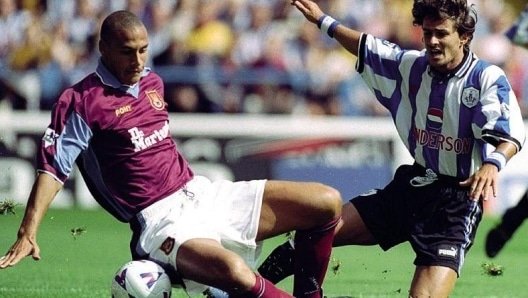
Before becoming a coach, he was a talented number 10 for Napoli and Inter and an Italian who wowed the Premier League.
“But I’ve always remained the same boy from Calabria with a dream in my suitcase and the privilege of having made it come true. My mother raised six boys on her own, selling oil; success couldn’t change me. Those jerseys that had belonged to Diego and Matthäus carried weight, but I never had performance anxiety. One regret, however, I do have: I left Inter too soon. With Hodgson I was playing out of position, but if I had waited six months, Gigi Simoni would have arrived and then Ronaldo: everything would have changed.
Sometimes in life you need patience, but I didn’t know that back then…“.
Third-highest Italian scorer in Premier League history after Di Canio and Zola (36 goals): do you feel these achievements weren’t appreciated in Italy?
”Let’s just say there wasn’t much talk about it… Back then there was no social media and the attention we have today. Now if an Italian scores in the Premier League, everyone knows about it. But England remains a wonderful experience; I even managed to learn English starting with gestures: after the initial struggle, by listening to the TV and talking with my teammates, I broke through in six months.”
Is it true that Sheffield signed Di Canio to make you feel less alone?
“When Paolo arrived, my life changed. Our families were always together; our children were the same age. On the field, we understood each other instantly—a single glance was enough: Di Canio was the best teammate I ever played with. Surviving relegation with Sheffield Wednesday felt like winning titles.“
But you never won a real trophy.
”At Aston Villa, I lost the 2000 FA Cup final to Chelsea—the club’s first in 26 years. In that tournament, I scored three against Leeds and finished as joint top scorer alongside the great Alan Shearer. The mistake was not renewing with them: they offered me a four-year deal, but I wanted to go to Trapattoni and Batistuta’s Fiorentina at all costs. In the end, I found myself at Bradford where I did… military service.”
In what sense?
“The training camp was military-style. Instead of a field, there was a barracks. From the moment you got off the bus, you had to march, just like in war: 15 days of Marine-style training, freezing water, tough obstacle courses, fake bombs. I didn’t see a soccer ball until the very end. Let’s just say that atmosphere didn’t help us…”
What was the Premier League like back then compared to today?
“It wasn’t yet such a global league, but it was a very tough championship. There were a lot of English players, and the game was all about the second ball: long balls, aggression, heart. I went up against really tough defenders like Tony Adams. Once, Rio Ferdinand told me he couldn’t sleep the night before playing against me. What a compliment!“
Was he your toughest opponent?
”No, I’d say Fabio Cannavaro, a friend who should thank me… In a Napoli-Torino match, he didn’t let me touch the ball once, and that’s when his rise began.”
Why are there so few Italians like you today—unpredictable attacking midfielders?
“There was a time when Italian youth academies focused too much on tactics and too little on quality. Coaches wanted to prove they were good instead of improving the kids. Fortunately, that’s not the case today: it would be a mistake to limit creativity.”
Did you expect more from the national team, though?
“I’ll take the victory with the Under-21s in 1994: I scored the penalty against Zidane’s France in the semifinals. But in my day, in the same position, there were Baggio, Zola, and Mancini, and Totti and Del Piero were coming up fast behind them. Plus, I was in England, off the radar of coaches. What could I do? Maybe, if I’d stayed at Inter…“.
There you go, always Inter.
”It’s been my favorite team since I was a kid. Coming back to defend this jersey has brought things full circle. Inter is a family I never want to leave.”