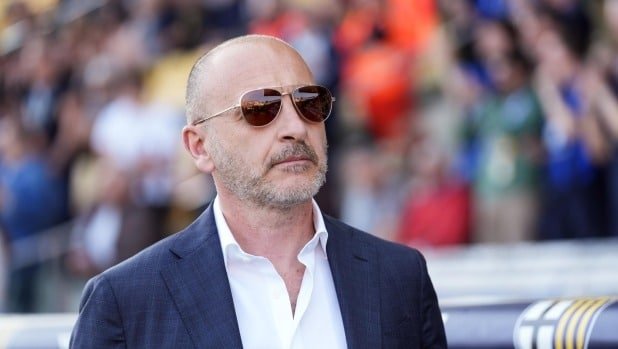
There is a photo of Pro Sesto, season 1990-91, Serie C1. You can see a boy, among those crouching down, who cannot bend his knee and keeps it high, almost forming a ninety-degree angle. It’s Piero Ausilio, now sporting director at Inter, at the time a very young footballer but already close to retirement. It was all because of that knee, which had been shattered two years earlier in a collision with Carlo Cudicini, son of the great Fabio, then goalkeeper for Milan’s youth team. Then Ausilio got his revenge on fate and on football. And what a revenge it was.
Ausilio, what happened that day in Pro Sesto-Milan, in the Allievi category?
“I collided with Cudicini, who later became my friend, and my knee was blown to pieces: cartilage, meniscus, even ligaments. I had always played for Pro Sesto, starting at the age of seven, and my career ended there. I remember my despair after that game and the sensitivity of Capello, who was a manager at Milan at the time—it was the late 1980s—and immediately came into the locker room to cheer me up.“
What kind of player was Ausilio?
”Good. Pretty good, come on. Not a fast midfielder, but smart and with good positioning. Do you know Cambiasso? Something like that, only a little worse.“ If you saw Piero Ausilio today, would you take him to Inter? ”No way, Inter is too much. But I think I would have become a good professional, let’s say in Serie C, at most Serie B. I was sixteen and already training with the first team, which was in Serie C1. And Serie C1 at the time was serious business.”
So you almost have to thank Cudicini: without that accident, your football career would not have been so full of joy. That completely fortuitous, random collision changed the course of events for the better for me. Only I didn’t know it at the time. And I suffered.” Did you give up immediately after the injury? In the end, I gave up. I didn’t even have the ligament repaired: it’s still torn. When I tried to play a few games of soccer, I would fall like that, on my own. So I said enough is enough: I haven’t touched a ball since.”
When did you decide to become a manager?
“At first, I had my sights set on coaching. I was assistant coach for the youth team for two years. I wanted to be close to the pitch; that was the only place I felt good. I was 21 when the president of Pro Sesto, Giuseppe Peduzzi, said something to me that changed my life.”
What did he say?
“He said: there will always be a better coach than you because you lack experience as a player, but you’re smart and you can have a great career as a manager. At first, I didn’t take it well and I left. Then I realized he was right. And I came back.”
You never stopped studying.
“It was the only condition my parents set: do what you want, but don’t drop out of school. I became an electronics technician; a diploma and soccer were enough for me. The diploma was for my mom and dad, soccer was for me. Then, after my injury, I had a revelation and enrolled in law school.”
You almost became a lawyer.
“I would say no. I passed all my exams quickly, but I didn’t discuss my thesis until 2004, when I was already well on my way in soccer. That year, I also became a sports director.”
Your thesis was on…?
“Criminology. Topic: doping and match-fixing as sports offenses.”
You’ve done everything in soccer.

Did the transfer market fascinate or intimidate you?
“I was enchanted: Mazzola, Braida, Giorgio Vitali, Perinetti, Rino Foschi, even Marotta… I was a kid, I watched them and tried to understand. It was all different from today: we were each in our own box, making appointments. But I started to get to know people, talk to them, and build relationships.”

Until Inter called him.
“It was 1997, Moratti asked me to become the secretary of the youth sector. It was only a six-month contract, I was taking a small risk but I accepted. Do you know what was the first match I watched abroad as a Nerazzurri executive? The 1998 UEFA Cup final, when we beat Lazio 3-0. I’ve never left since, gradually growing within the club.“
Isn’t it reductive to have only ever worked at Inter?
”But Inter has been a great school, I’ve tried everything. That includes four very different owners, even in terms of nationality: Moratti’s solidity and absolute competence, the difficulties of the Thohir era, the initial uncertainties with Suning that were dispelled by the arrival of Steven Zhang. And now Oaktree. I don’t think I’m lacking in experience, even if I’ve had it all at Inter.”

You also worked with many sporting directors before taking on that role.
“The first to involve me was Sandro Mazzola, who took me with him to the transfer market to act as his assistant. Then I worked with Oriali, Terraneo, and, in recent years, alongside Marotta. I got on well with everyone and learned from them all. Although I can’t deny that I had a special bond with Marco Branca.“
You brought many great players to Inter. Which ones are you most proud of?
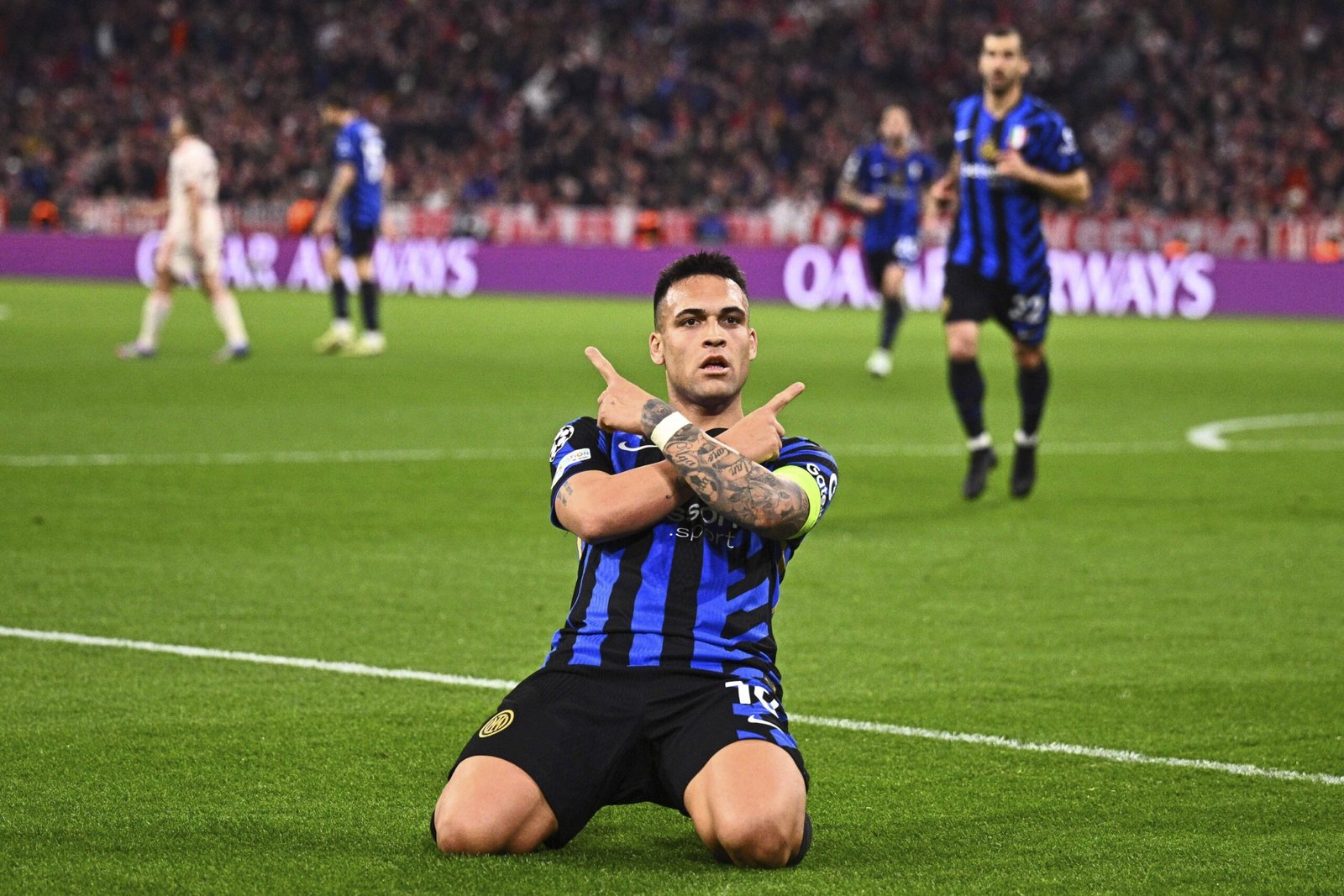
”Kovacic and Brozovic, who we chose when Branca was in charge. And then Onana, who we signed for free and sold for $55 million after a year. And Lautaro, Bisseck, Thuram…”
How can you tell if a young player has the qualities of a champion?
“Working with young players has helped me a lot. You have to be able to see if they have the fundamental qualities and if their flaws can be overcome with application and commitment on the pitch. I’m thinking of Kovacic, Bisseck, and Lautaro: they all had imperfections, but they could be remedied.“ What are the flaws that cannot be erased? ”A lack of desire to grow, personality, certain athletic characteristics: if they lack drive, strength, endurance, speed, they can’t reach the highest levels.”
The most difficult operation?
“The winter transfer window. I sold a player abroad and breathed a sigh of relief: it was a very tough period for the club, we were struggling to pay salaries, and that deal would have put us in a secure position. Just as we were about to sign, a well-known divorce lawyer called me: he couldn’t let the player leave, his wife wanted a separation, we asked for his passport to be withdrawn. I was almost desperate: how are we going to get out of this? I asked myself. I locked them in a room until they sorted everything out: divorce agreement and transfer of the player. I don’t know if it was the most difficult deal I ever closed, but it was certainly the most important.”

The mistake you made?
“Kvaratskhelia. But I wasn’t the only one who got it wrong; many big clubs in Italy were interested in him. The thing is, we played with a 3-5-2 formation and he’s a 4-3-3 player, so we didn’t sign him. I’m used to building teams based on the coach’s ideas.”
Do your children love soccer?
“Giulia has taken a completely different path; she works in media communications. Niccolò wasn’t very good with his feet, so he stopped playing early, but he’s passionate about the game: he watches thousands of games and studies the players. When Jashari went to Milan, he gave me a hard time.”
Why?
“He said to me: I recommended him to you when he was at Lucerne, you let him get away. It’s true, he did tell me about him, but I replied: we can’t take all the good ones.”