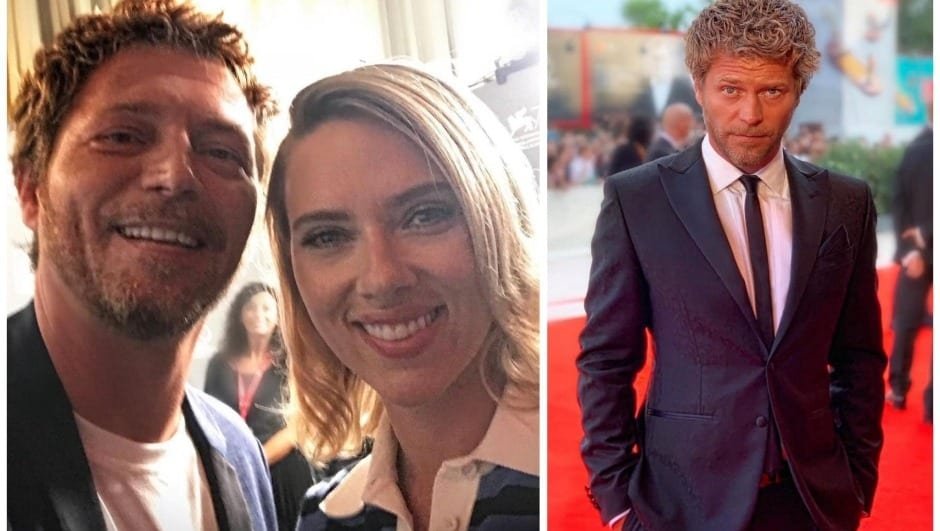
TV host, author, radio personality. Always moving at full speed. Then he made a choice: to slow down. And he recounted it in his book, *Un decimo di te*: “This way, I’m living more fully in the present”
Sometimes all it takes is one step to change direction. For Marco Maccarini, that step was real and tangible: along a dusty trail, with a backpack on his shoulders and the noise of the city now far behind him. After years spent at a frenetic pace amid cameras, stages, and live radio broadcasts, he chose to slow down. Not to escape, but to listen. To listen to himself. Walking has become his new compass: a simple, everyday act, yet one capable of transforming into a powerful practice for physical and mental well-being. Through walking, he has learned to leave behind not only material excess, but also the inner “burdens” that often prevent us from truly moving forward. This personal turning point has also become a shared story. In the book *Un decimo di te*, Maccarini weaves together practical advice, memories, and reflections that emerged step by step along ancient paths and through landscapes that have reshaped his concept of time: “I felt the need to leave something in writing, something lasting: I realize this isn’t like me, given my professional background. Because I’ve always been used to working in radio: my messages were fleeting. Moreover, I didn’t grow up in the Internet age, where words remain—for better or worse—on the World Wide Web.”
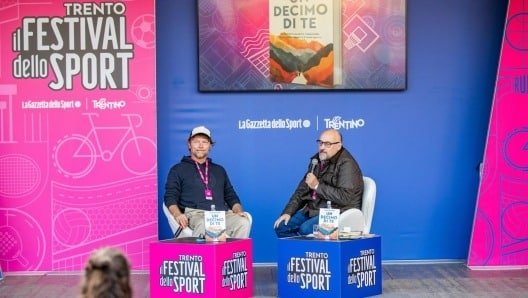
“The title refers to a golden rule for hikers: your backpack should never exceed one-tenth of your body weight. But, if we broaden the meaning, it’s not just a physical issue: every now and then, we can also leave our problems at home and discover what it’s like to live—and walk—without that burden.”
Why start hiking?
“Because hiking gives you plenty of time to yourself: it’s a long meditation in motion. After a few days, your body gets used to the rhythm of the hike, and as the days go by, you feel more and more fit. And you realize that time spent in silence has also cleared your mind.”
Better alone or with company?
“Most of the time I walk alone: in those moments, I’m able to focus my attention on myself. My daily life often involves sharing my day with many people, all very different from one another. That’s why I prefer to have these experiences mostly on my own.”
But I’m not always alone.
“I’ve had friends like Corrado Fortuna, Roy Paci, Frankie hi-nrg mc, and Maccio Capatonda join me on some legs of the journey, and it was absolutely delightful. And then there were times when I shared the journey with ‘non-walkers’ like Fabrizio Biggio and Angelo Pisani: we respected and helped each other, understanding each other’s needs, alternating between hours of pure fun and moments of introspection.”
When did you realize you needed to “walk” in a deeper sense, not just physically?
“ It happened in 2005, when I tackled the Camino de Santiago for the first time: back then, it was far from the popular phenomenon it is today. I didn’t share it with anyone—it remained an experience all my own. Then, starting in 2016, I began talking about these journeys, and over the years, I’ve led thousands of people on walks.”
Where did this decision come from?
“I was in a happy and fulfilling phase of my career: I’d just come off some intense years with TRL and Festivalbar. But I didn’t have time for myself. I was moving too fast. A friend’s father advised me to slow down. That was the first time I began to read the signs that the journey was offering me. Because I’d given myself the time to do so.”
Going back to 2005, how did you feel during those first few kilometers?
“I wasn’t prepared, either physically or technically. I set out with a backpack that was too heavy, and the first few kilometers were very painful. But right away, I met people who gave me valuable advice. The physical pain disappeared after a few days, giving way to a sense of awareness and the joy of what I was experiencing.”
What was the journey like?
“There’s an unwritten rule I learned the hard way: at first it’s pleasant, but by the end of the day you feel the fatigue. On the second day, you muster the strength to set off again. The third day puts you to the test. If you get through that moment, things can only get better. And from the sixth day onward, you could walk… forever.”
Has your approach changed over time?
“Over the years, I’ve learned to train before setting out. It’s a very useful habit for avoiding those initial aches and pains. In the two months leading up to a hike, I try to get moving three or four times a week, so I can enjoy the journey right from the very first step.”
Hiking alone can be scary: how have you learned to cope with solitude?
“Actually, I really love it. If you’re in the right frame of mind, solitude isn’t scary—in fact, it becomes an ally. If there’s a real danger, you have to be careful. But often, fears are just figments of our imagination—you shouldn’t let them hold you back. Fear breeds more fear. My advice? If you have to do something new, just do it. Don’t let hypothetical risks stop you.”
What physical benefits have you noticed since you started?
“Walking reduces body fat even if you don’t always lose weight: your muscles get stronger and your body becomes as strong as steel. I consider myself a joyful traveler, not a penitent pilgrim: I enjoy sharing convivial moments with other walkers. Some routes, like the Magna Via Francigena in Sicily, have you coming home a few kilos heavier thanks to the hospitality of the locals.”
How do you manage pain and prevent injuries?
“It’s a very personal matter. On devotional pilgrimages, like the Camino de Santiago, even physical discomfort is part of a journey of purification. However, I always try to be proactive: I use petroleum jelly to prevent blisters, lighten my backpack to protect my knees, and take care of my feet every evening. I also do some mental work: I try to figure out if a physical pain might correspond to something psychological. Giving meaning to the pain helps me overcome it.”
How important is nutrition?
“ I’m not very strict about it during preparation, but I am while on the trail. There have been trips, when I was alone, where I prepared my food in advance: I dried it to reduce the weight and rehydrated it along the way. In less than a kilo, I managed to carry enough for five days while maintaining a balanced diet.”
Future plans?
“ I’d like to explore central and southern Italy more: a Calabria Coast to Coast or the Cammino delle Terre Mutate, for example. When you walk, you really appreciate the beauty of our country—it often escapes us when we drive through it. In a few years, I also dream of tackling some of the great American trails, like the Appalachian Trail or the Pacific Crest Trail.”