The Rossoneri’s legendary “Doc” opens his book of memories: “To give the boys more sugar, I brought tart to Milanello. I told Van Basten not to have surgery. If he had listened to me, he would have given us another two or three years of his fantastic football.”
In his imaginative chronicles, Carlo Pellegatti called him the “son of Aesculapius,” in Greek Asclepius, the god of medicine. Rodolfo “Rudy” Tavana was Silvio Berlusconi’s Milan doctor, winning Champions League and league titles, diagnosing and treating players.
Dr. Tavana, in 1987 Berlusconi called you to Milan. Why you?
“I was a traumatologist, dividing my time between Pro Patria athletics and the national cross-country skiing team. I had gone to the US to update my skills, between the San Antonio Spurs (NBA basketball, ed.) and the Dallas Cowboys (American football, ed.). Milan had Dr. Monti as their doctor, who was very good, but Berlusconi wanted to create a comprehensive healthcare facility and chose me, out of eight candidates, to be the director of the area. I started with nutrition. The fuel for high-intensity exercise is sugar, and Swedish studies at the time showed that by the end of the first half, the players had already used it up.”
Did you introduce the famous tart to Milanello, which caused so much controversy, to increase sugar intake?
“Yes, Berlusconi himself was surprised that everyone ate whatever they wanted. Rules had to be set. The tart was eaten as a snack and in pre-match lunches, but Berlusconi imposed other changes. For example, every doctor, from me to my colleagues in the youth sector, had to be on call once a week. There were no cell phones, so they gave us a buzzer. When it rang, you had to run to the phone and call a Fininvest switchboard, which would inform you of the emergency intervention required by this or that player, for themselves or a family member. Berlusconi wanted the players to focus solely on playing, with the club taking care of all their concerns, whether it was a child’s fever or a wife’s illness.
“He was skeptical, but in 1988, when Sacchi won the Scudetto, he said we had won because we had introduced a new sports medicine. Dr. Monti told me that in the past, athletic trainers appeared during summer training camps and then disappeared, which seems crazy today. We made it a permanent and constant presence. We started working on the prevention of muscle injuries and tendinopathies, which account for almost 50 percent of football-related injuries, because wear and tear is inevitable. In baseball, the pitcher will sooner or later suffer from shoulder problems.”
An anecdote about Arrigo Sacchi, the coach who first led Berlusconi’s Milan to victory?
“On Wednesdays, Arrigo worked on super speed with downhill sprints. I told him that in athletics they had abandoned them because of the risk of strains and tears. Arrigo replied that this work guaranteed excellent pace in the game. Shortly afterwards, during a downhill sprint, Evani injured his flexors and Sacchi abandoned this method.”
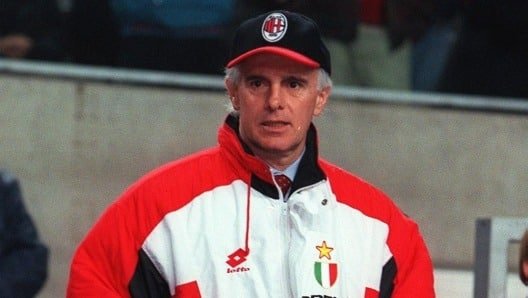
And what about Capello?
“He had been a player, he understood all the dynamics, but for me, he remains linked to the Champions League final against Barcelona in 1994 in Athens. A few days earlier, at the Milanello bar, a journalist had made this joke, which had reached the dressing room: ‘Milan would do better not to show up, they would only lose 2-0 by default’. Then Sports-Predictions published a photo of Cruijff (Barça’s coach, ed.) with the Cup in his hands. Seba Rossi, the goalkeeper, noticed it and passed it around among his teammates, Paolo Maldini first. Cruijff said that Barcelona had bought Romario and that Desailly had arrived at Milan. All of this fired us up. So we won 4-0, with a wonderful performance. Desailly played a monster game, scored a goal, and spent the night in bed with a severe headache from post-victory stress.”
Let’s talk about Marco Van Basten, who retired at age 30. You were against the operation on his ankle, which had been weakened by thinning cartilage.
“I opposed the first operation, performed by Professor Marti in St. Moritz, Switzerland. Professor Martens then intervened to repair the damage. Van Basten writes in his book (Fragile, ed.) that the surgeon told him he would be back on the field in two months and that he believed him. He then adds that everyone at Milan was opposed to the surgery. I fought until the very end. Marti wanted to clean the cartilage, but I told Marco that we shouldn’t remove what little protection was left. It was no use, and I’m sorry, because he could have given himself and us another two or three years of his fantastic football. Van Basten was a born sportsman. When he switched to golf, he reached a handicap of 3. Once he went skiing, something he had never done before, and at the end of the day the instructor told him that he was already skiing as if he had taken twenty lessons. He had a natural ability to learn any motor skill. Marco remains my greatest regret.”

Did all the Milan players behave well?
“They were exemplary professionals, there was no sign of late-night escapades. Sometimes, I would go to restaurants where I knew they were having dinner and ask what they had eaten: never a slip-up, even when they went out they followed our nutritionist’s guidelines.”
Gullit?
“One evening he called me: ‘Doc, I’ve got a little pain.’ It was the week of Napoli-Milan on May 1, 1988 (the match that would effectively give Milan its first Scudetto of the Berlusconi era, ed.), and I was worried: ‘Ruud, come to my house on Via Novara.’ Gullit arrived, I examined him, saw that it was nothing serious, and said, ‘Stay for dinner with me, come on.’ One of my two dachshunds nibbled Ruud’s calf. I disinfected the scratch and that was it. The next morning, Gullit showed up at Milanello limping and with a conspicuous bandage on his bitten leg: ‘Doc, have you seen your dog? I’m not playing against Napoli.‘ I head for the locker room and think that my career at Milan is over, that Berlusconi will fire me. When I get to the field, Gullit comes out all smiles and without bandages: ‘Doc, it was a joke!’”

Any other pranks?
“During my second spell at Milan, the team celebrated a goal by imitating my thoughtful walk, with my hands clasped behind my back. They turned to me and laughed. The next day, Sports-Predictions published the photo and the caption mentioned a mysterious celebration.”
You also had to deal with Robi Baggio’s devastated knees.
“He was a very serious professional, so it was obvious that part of his work was different. Before training, he would do a routine of exercises for his knees. He was very popular, especially in the East. I remember a friendly match in Asia, the whole stadium was chanting his surname, mispronouncing it: ‘Bagghio! Bagghio!’”.
During his second spell at Milan, between 2011 and 2017, he saved Antonio Cassano’s life.
“When we landed at Malpensa, returning from a trip to Rome, Thiago Silva came to me: ‘Doctor, Cassano is not well, he’s confused’. Dr. Mazzoni and I tracked him down in the parking lot. He wanted to drive home in his car. We did some basic neurological tests, and something was wrong. I told him, ‘Get in, but Dr. Mazzoni will drive your car and take you to the hospital.’ We didn’t know what it was, it could have been ischemia, we had to act quickly to reduce any damage. Mazzoni stayed with him in his room, it must not have been an easy night… The tests determined that it was a neurological problem originating in the heart. Cassano underwent surgery and the problem was resolved, and he regained his competitive fitness. Cassano thanked me in his own way: ‘In the parking lot, your authority forced me to obey’. Incidentally, a few years earlier, Egidio Calloni (former Milan center forward in the 1970s, ed.) had suffered the same thing. He was lucky twice: he felt ill while driving, veered off the road, and saved himself.“
Have you had to impose yourself on a player on other occasions?
”On Leonardo, for a head injury: ‘Doctor, I’m fine and I’m staying on the field’. I told him: ‘No, you’re coming off and we’re taking you to Niguarda’. Even today, Leonardo doesn’t remember the ambulance ride. Something similar happened to me with Donnarumma: he took a blow to the head and didn’t want to come off. I said to him, ‘I’m sorry, there’s the second goalkeeper, let’s go to the hospital’. You can’t mess around with your head. When we went to Wolverhampton, England, with Torino, I was struck by the fact that there was a room inside the stadium with a doctor assigned to monitor players with head injuries via video. He explained to me that it was he who, based on the images, decided whether the injured player would continue playing or not.”
Trauma in general is suspected to be a contributing factor in the onset of ALS, amyotrophic lateral sclerosis, which has affected and killed many footballers…
“Among them was Stefano Borgonovo, who I had at Milan. I don’t believe there is a direct correlation between football and ALS; the numbers don’t tell us that. There is a study that highlights a broader issue: ALS is more common among those who do physically demanding work.”

After Milan, in 2017, he went to Torino.
“With President Urbano Cairo, whom I knew from my time at Milan because he worked with Berlusconi. I always say: Torino was technically bankrupt, Cairo saved it and brought it back to Serie A. During my years at Torino, he was always present, he wanted to have the situation under control, a bit like Berlusconi at Milan. I enjoyed my time at Toro.“
You were the medical advisor to Pietro Ferrero, who died in Cape Town, South Africa, while out cycling, his passion.
”I met Pietro because of his injured ankle, which I treated at Milanello. Then he sought me out because he wanted to create a line of drinks and foods for children who play sports at Ferrero in Alba. Children spend the morning at school and the afternoon playing sports, so they need to eat and drink accordingly. Pietro died at the age of 49 from a genetic heart defect that had not been detected by sports fitness tests. When he cycled in his Langhe region, he was followed by a minibus with a defibrillator. He had no reason to think he was at risk of death; it was his own precaution, for safety’s sake. Unfortunately, in South Africa, he was alone. Fate as an element of life. Is it true that Berlusconi’s Milan could have disappeared in flight, as happened to Grande Torino?
“At the end of September 1987, we played a UEFA Cup match against Gijon on neutral ground in Lecce (a 3-0 victory, ed.). We returned to Milan on an ATR 42. That same plane, with the same crew, crashed into a mountain in the Como area two weeks later while flying from Linate to Cologne (37 victims, ed.). What else can I add?”