The head coach of the Italian women’s national volleyball team: “There will be a spot on my staff for De Gennaro whenever she’s ready. We need a 12-team league; there are too many games right now. After the Los Angeles Games, I’ll make way for someone else”
In two years at the helm of the women’s national team, he has known nothing but victories. Olympic gold in 2024, World Championship gold in 2025, plus two Nations League titles. Now coach Julio Velasco is ready for a third summer full of challenges and new developments. “I spent the whole winter without coaching, so I’m really eager to get started again. I need to recharge my batteries, to study. I need time, but when March comes, I’m eager to get to work.“
What ideas have emerged from your winter study?
”I told the girls: ‘To keep winning, you have to think that you lost the previous summer. And you have to plan your work by thinking about what we should have done to win.’ So I’ve focused on the things we need to improve. Among these is the idea of having Antropova play as an outside hitter.“
Can you tell us more about this plan?
”I want to try her out in this role for the entire Nations League. We need to evaluate various aspects, from her reception to her defensive positioning and how to use her in the counterattack. Her serve deserves to be utilized more; her blocking against very physical opposites like Haak, Boskovic, and Vargas can give us an extra edge when our opponents are on the front line. And then Ekaterina has excellent shots from position 4. All of this, however, needs to be tested and evaluated. Then, before the European Championship, we’ll assess the results and determine if it’s worth continuing with the plan.”

How much rest will Orro, Danesi, Sylla, and Egonu get?
“I’ll give them a four-week break starting from their last club match. They’ll likely return after the Nations League, but if any of them finish their playoffs and European cup commitments early, they could join the group before the VNL finals scheduled in China.”
It will be the summer after De Gennaro. It won’t be easy to replace her.
“Monica is extraordinary. I told her that whenever she wants, we’ll bring her onto the national team staff or, if she prefers, the youth team staff. When she stops playing, she’s a treasure of Italian volleyball that must not be lost. But I’m not worried at all about the future. Fersino is playing very well, as are Spirito and Moro.”
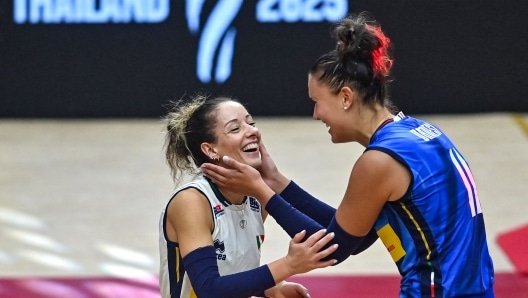
With Antropova playing as a spiker, we need to find a second player for the role who brings more balance. Have you thought about this?
“When I started working with this group in 2024, some people suggested I play Antropova and Egonu together. I said no at the time; Sylla was having some issues with her reception. Over the past two years, she has improved and worked hard with success. So it’s not out of the question that she could play alongside Kate and Paola. There are also Nervini and Giovannini, who were very important last season. Stella is a key player in Chieri, and Gaia is our wild card on defense.”
Valerio Lionetti, coach of Macerata, has joined the staff as an assistant. How did you choose him?
“Barbolini will only be present for the matches and for some training sessions, so I needed an additional coach. The method used for the selection is simple: meritocracy. I didn’t know Lionetti, but he led Macerata to A1 and secured their survival this year. After I offered him this role, I went to meet him.”
Young players aren’t popular in Italy. At 16, Yamal would never have been a starter in Serie A
Julio Velasco
Will the trip to Los Angeles be your last with the national team?
“I think so. Then it’s time for someone else.”
Do you see a future as an executive?
“No, I absolutely rule that out. I love doing what I enjoy. Let me tell you something my friend Gianni Mura said to me when he was asked to take on a leadership role at his newspaper: ‘I turned it down because I like to write.’ See, I love coaching.“
What does the league tell you?
”One of volleyball’s problems is also the country’s. Young players aren’t appreciated. If they make a mistake, they aren’t criticized—they’re judged. I always use this example: At 16, Yamal would never have been a starter on an Italian soccer team. At Barcelona, he would have.”
There’s also Egonu’s growth…
“I’d already noticed this process since I joined the national team. Of course, her role as captain at the club has helped her grow even more. Her role isn’t easy because she’s always in the public eye; she’s always being judged.”

Players are complaining about the schedule and the high number of matches. What do you think?
“It’s true that we play too much. I think a league like the women’s one with 14 teams is too big. Twelve would be enough.”
The idea of scheduling the World Cup at a different time of year—in January—is also gaining traction. What do you think?
“It would be a disaster. If there’s one thing that works compared to other sports, it’s that the club and national team seasons are separate and don’t generate controversy, as happens, for example, in soccer.”
I often hear from Quesada; I was sure he’d do well: we Argentines are used to being creative
Julio Velasco
Last year, some athletes turned down the call-up to the national team, preferring to focus on recovering from injuries, and you said: “The doors to the national team will never open for them again.” Have you changed your mind?
“I’ve been doing this since 1989, and it’s always worked. It’s not up to the players to decide whether or not to join the national team. I’ve always demanded unconditional commitment to the national team. You can’t decide on your own to take time off to recover and then return the following year. We are the ones who decide, together with the national team’s medical staff and the club’s. So no, I haven’t changed my mind.”
Did you follow the Winter Olympics?
“It might sound cliché, but what Brignone did is historic. Impressive. Her decision to take the risk was extraordinary. Of course, this shouldn’t push us to play injured athletes. These Olympics, along with the Summer Games in Paris, demonstrate once again that Italy is a great country. We need to stop looking at our neighbor’s grass and thinking it’s greener.”
Can you tell us about your friendship with Quesada, the head coach of the Italian national rugby team?
“We talk and write to each other often. I was certain that an Argentine coach would do well. When you choose a coach from a country with a great tradition, he isn’t used to giving up when things get tough. Argentines are used to making do with little, and we’re used to being creative.”