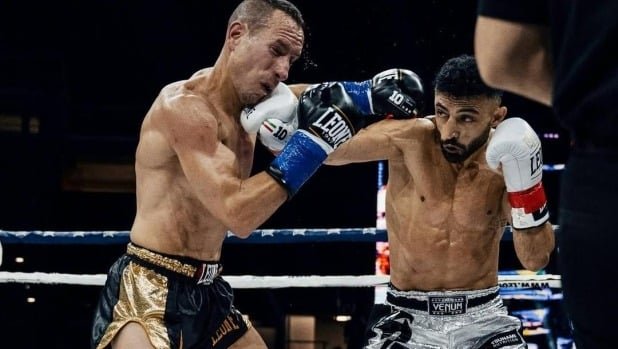
One of the greatest kickboxers of all time is retiring on Saturday with one final match: “I arrived in Italy in a truck: 13 years old and 13,000 fights. I’d get up at 6 a.m., go for a run, then head to the construction site to work, and I’d ask for the heavy-duty jobs to get strong. My first fight paid 1,700 euros; then I won a million, but take away the taxes…”
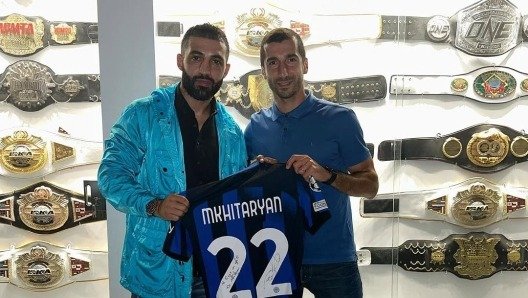
Giorgio Petrosyan belongs to the same lineage as Sinner, Tomba, and Vale Rossi: in his sport, kickboxing, he’s won it all and is considered one of the greatest of all time. In his gym, he makes sure to let you know right away—as soon as you walk in, there’s a display case with all the belts he’s won, and it takes just a minute to scan them all. He’s decided to retire, and when a king retires, he doesn’t just say so—he looks his people in the eye: Petrosyan will do just that on Saturday night at the Allianz Arena in Milan. One last fight against Portugal’s José Sousa—one last chance to see “The Doctor”—they call him that because he strikes with the precision of a scalpel—in action. His story is one of unspeakable sacrifices; you can read them all in his eyes, as black as night, as he shows you his scars.
Petrosyan, why are you quitting?
“I still have the desire, but preparing for a match has become hell. Do you know how many injuries I’ve had?”
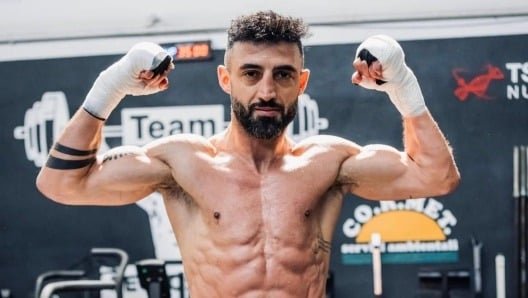
No, list them.
“I’ve broken my left hand 11 times—I don’t even know how many times my right one—plus three jaw fractures, my knees, my feet, a cervical herniation, and a broken nose, which is normal for me. I’ve always had surgery in time and fixed the problems, but when my mind wants to push on, my body tells it, ‘Oh, stop—you’re not 20 anymore.’”
But he’s saying goodbye by fighting. A noble gesture.
“And yes, I’ll be extremely well-prepared despite everything. It was my brother’s dream to organize my final fight; doing it in front of my people fills me with pride. We’ll celebrate with a great victory.”
Petrosyan’s story begins in Armenia. His earliest memory?
“My father taking the whole family on vacation to Lake Sevan when school let out; there, we ate well and were happy. War was already raging; there were soldiers around, and I befriended some of them—in exchange for food, they let me fire a Kalashnikov into the water.”
Even as a child, Petrosyan already had fighting on his mind.
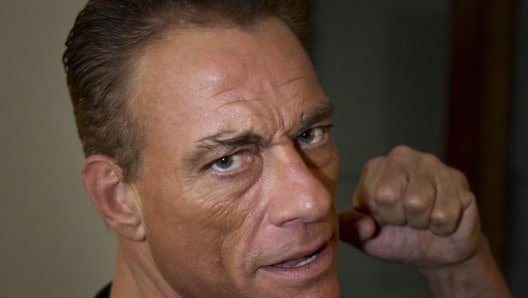
“Before going to school every morning at 6 a.m., I’d go for a run, then pull a punching bag out from under my bed and start hitting it. I’d copy the movies. One day I’d be Bruce Lee, another day Van Damme…”
The war, as we were saying. A few years later, you, your father, and your brother Armen hid in the back of a truck and arrived in Italy.
“I remember watching an Italy-Brazil game on TV a few months earlier. I was rooting for Brazil and thought it would be amazing to go there; my brother Armen was rooting for Del Piero and said Italy was better. In the end, his dream came true. But my earliest memories of Italy are terrible: Milan’s central station, freezing cold, not knowing where to sleep, me with a fever of 40 and a throat on fire, my father looking for help.”
Then you ended up at Caritas in Gorizia.
“And even there, I trained on my own. I tied mattresses to a pole and practiced kicks and punches. An Armenian friend took me to Paolo Vidoz’s gym, but he was in Sydney for the Olympics, so I had to wait for him to return to sign up. Getting better is an obsession for me; I get up at dawn, run for kilometers, then go to work on a construction site and deliberately ask to be assigned the heaviest tasks to build strength. At twenty, I quit being a bricklayer because going to the gym once a day wasn’t enough for me anymore.”
In 2004, kickboxing brought in my first earnings.
“In Bologna, I fought a Thai guy; they paid me 1,700 euros, and as soon as I got it, I gave it to my dad—the family needed it.”
His career: 115 fights with only 3 losses, one of which was rigged.
“Yes, in Thailand. There were a lot of bets behind the scenes; they put diuretics in my water, and I stepped into the ring completely dehydrated. I could have given up, but I was carrying the Italian flag, and over there, Italians are seen as unreliable—people who go down right away or give up the fight. ‘Even if you can’t stand up, you have to fight out of pride,’ I told myself.”
You’re not Thai or Dutch—in short, you don’t come from a country with a tradition in this sport: you came from nowhere and turned it upside down, which took twice the effort.
“To motivate me, my father always said, ‘Gorizia is a small town; the stronger you get, the more the world will know you.’ I took the hardest path, but that’s exactly why it was twice as rewarding.”
You and your brother didn’t receive your passports until 2014, based on your athletic achievements.
“It bothered me a little; I’ve always had only one flag—the Italian tricolor—and that’s how it should be; I grew up here. But without a passport, I had a lot of problems. To travel abroad, I only had a travel document—a form of ID that other countries don’t recognize. Hours of waiting in line at customs to explain myself; right up until the last minute, I didn’t know if I’d be able to compete officially or not.”
What’s Italy like for those coming from abroad?
“Something isn’t working right. People who break the law don’t pay the price. Not everyone who comes here is the same—for those who deal drugs, steal, and cause trouble, we need stricter rules. It’s not right that they get out after two days and go back to doing whatever the hell they want.”
He won the event that most closely resembles the plot of a Van Damme movie: the One Championship Tournament, featuring the world’s best in a single-elimination format, with a million up for grabs.
“I found out that Van Damme used to be a dancer, and that kind of shattered the myth for me a bit… Actors make movies; I fight. I got started thanks to them, but I was better because I actually turned a dream into reality. The million? Take taxes out of that…”
His toughest opponent?
“That Thai guy in Bologna back in 2004. I’d only had 25 fights; he’d had nearly 300. No one wanted to fight us. It ended in a draw, and I suffered a lot because I wasn’t strong enough—if I faced him today, he wouldn’t last even one round.”
In combat sports, how much does technique matter, and how much does mental toughness matter?
“Technique matters a lot, but you need mental toughness to use it. You can have a Ferrari, but it’s useless if you don’t know how to drive it.”
You train a lot of young people—do you see the same fire you had?
“No. I know it’s a mistake to make comparisons, but if I were to have them do the workouts I did when I was 16, a normal person wouldn’t last three days.”
Why is that?
“When I arrived, I was 13 years old and had been in 13,000 fights in Armenia—it was a different mindset. You see so many people who train just to take a photo, post it on social media, and show their friends that they fight. It’s just that life is good in Italy. If you’re comfortable, where do you find that fighting spirit?”