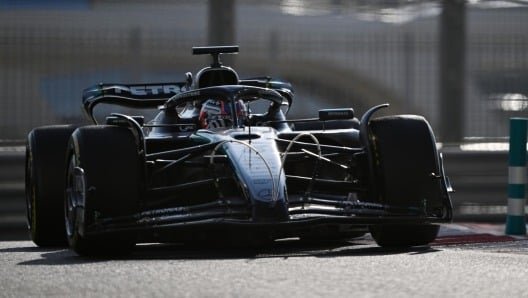
A former employee reportedly revealed how certain special components work, altering their characteristics depending on whether the engine is on or off. Ferrari, Audi, and Honda have reportedly asked the FIA to investigate
A revolutionary 2026, marked by the new technical cycle, begins for Formula 1 amid the first controversies. The search for “gray areas in the regulations” has always been part of this sport’s history, and even before the new power units are fired up, the top-tier paddock—which has just gone on vacation following the conclusion of the championship—is already looking at who seems to have found and exploited these gray areas.
According to a rumor reported by Motorsport Magazin, a dispute is reportedly underway among manufacturer teams regarding the compression ratio of the cylinders for the new engines. Mercedes and Red Bull (which will produce its own engines for the first time in 2026) are said to have found a way to circumvent a clause in the new technical regulations, point C5.4.3, by keeping the compression ratio within the permitted parameters with the power unit off but managing to increase the ratio while the car is in action on the track. A trick that would allow teams to circumvent the rule change from the previous regulations, with the ratio reduced from 18:1 to 16:1 for the upcoming championship, precisely to limit the performance of the combustion engine in light of the tripled power of the electric component in the new engines.
FIA investigation— According to rumors, the federation was alerted to the potential cheating by rival manufacturers—Ferrari, Audi, and Honda—who reportedly joined forces to request direct intervention by the FIA. The news may have been leaked outside the walls of the suspected teams by a former Mercedes or Red Bull employee who, having moved to another team, revealed details of the circumvention system based on thermal expansion: the teams allegedly designed internal components capable of expanding when the power unit is operating at high temperatures, thereby reducing the volume of the combustion chamber and increasing the effective compression ratio. The ball is now in the federation’s court; when questioned on the matter, it confirmed that “thermal expansion can affect dimensions at operating temperatures, but current rules do not require measurements at high temperatures.” The matter will continue to be discussed in technical meetings with power unit manufacturers. The FIA constantly reviews such issues to ensure fairness and clarity in the regulations. In the future, changes to the technical regulations or measurement procedures may be considered.”