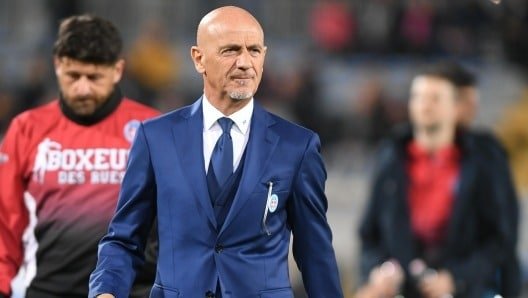
The coach, speaking today in Bellinzona: “I came from nothing. I’d wake up at 5 a.m., work seven hours, then head to the field. I resigned from Watford after four wins, leaving the money behind”
The essence of his life’s goal is summed up in a few words: “I cleaned toilets in a mental hospital and ended up coaching in Serie A.” Beppe Sannino, 68, chuckles contentedly as he explores his globe. The present says Bellinzona, the Swiss second division—“ready for yet another miracle”—but after every swing of the pickaxe, he’s stuffed pieces of rock into his backpack. Six promotions, four championships won, a gold bench in Serie C and another in silver, plus several resignations.
Nine: why so many?
“That’s just how I am: I speak my mind. I resigned out of dignity, leaving money behind. At Watford, I turned down £550,000 after four wins in the first five games. And after winning Carpi’s first-ever Serie A match, I said it was all Castori’s doing, not mine.”
“ I’m not going back to Italy: too many clichés.” Which ones?
“I don’t live on the moon. I know I’ve given my best and that I’m on the decline, but in Italy you become a public figure. They ask you if you eat panettone. And social media is ruthless. At my age, I don’t want to get caught up in that whirlwind. I’m someone who started from nothing and made it on my own.”
Tell us about that “nothing.”
“I was born a Neapolitan street urchin, then I moved to Turin. I was the only one walking around in shorts and flip-flops, hence the nickname ‘ciabattino.’ I just played; I often skipped school. Once, to punish me, my father set my soccer cleats on fire on the balcony using alcohol.”
I cleaned toilets for the equivalent of 900 euros today. I scrubbed the floors with sawdust; there were cockroaches. And I helped the patients. In the asylum, I learned what suffering was.”
As a soccer player, did you have the career you deserved?
“I was a genius and a wild child; I’ve never coached anyone like me. I made it to Serie C, then I quit at 31 and started coaching the Vogherese youth team. I’d sneak off to watch Sacchi’s Milan.”
And in the meantime, you worked at the hospital.
“Wake up at 5 a.m., dawn shift, seven hours there, and then out on the field to coach. I did that for ten years, first at a psychiatric hospital and then at a general one.”
What did you do there?
“I cleaned toilets for the equivalent of 900 euros today. I scrubbed the floors with sawdust; there were cockroaches and all sorts of things. And then you helped the patients. Besides, at the mental hospital, I saw real suffering. I remember a very talented painter who just sat there painting, and you wondered why. At the general hospital, on the other hand, I even saw friends and Vogherese fans die.”
When did you start focusing solely on the field?
“In 1998, at Biellese. I took a year’s leave of absence. But the turning point came at Südtirol, in 1999–2000, where I won the Serie D championship. I’d quit my job on purpose that summer so I could go there. After winning two championships in Lecco and Crema, I stayed home. And I ran. Through the hills of Monferrato, every day, until in the spring of 2008, an agent advised me to go to Como to watch Como vs. Varese in C2. Both coaches were on the line…”
Como won 3-2, and you went to Varese.
“The story of my heart. I arrived with 500 fans; I left with ten thousand. Three years without a home loss. I immediately told the players to go to hell. It became the slogan for the two promotions. I had a T-shirt that said ‘fun cool,’ but in Italian it reads as you know. The relationship with the fans was top-notch. They sang: ‘Oh Sannino, send us to hell…’ And I did. I met Sogliano at the Albizzate station, and he told me I was getting on his nerves; from there, a wonderful relationship was born. In 2011, we came close to Serie A. I left in tears, with a letter dedicated to everyone.”
Destination Siena, Serie A.
“At the Olimpico, against Roma, I thought: ‘I’ve made it.’ Totti and the others emerged from under the South Stand; they looked like gladiators. I asked my assistant: ‘How many are we going to concede today?’ It ended 1-1. One of the best games I’ve ever played.”
Is it true that Napoli contacted you?
“I told De Laurentiis to go to hell. Obviously, I didn’t think it was him; I thought it was a joke. “Have you already dealt with Zamparini in Palermo?” I told him yes.”
How did it go with the Rosanero?
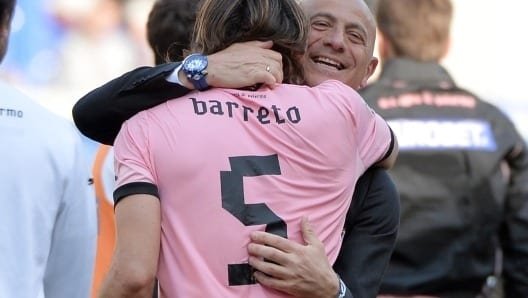
“I’ve never had as many offers as I did at the end of that season, which ended in relegation. Genoa, Lazio, and others. It went badly, but we didn’t deserve it. I was lucky enough to coach Dybala, the best of them all.”
A quick word on Zamparini?
“I had a fight with him before a Palermo-Cagliari 1-1 draw, with a goal conceded in the last minute. He had me called to the lobby to tell me the lineup. I answered him in my own way. ‘Who does he think he is?’ he replied. The next day we drew and I was fired, but he was a generous man. If we’d avoided relegation, he would’ve given me 500,000 euros, but I told him I wouldn’t accept it. That’s just who I am.”
Consistent, just like at Watford. Why did you resign there?
“My only regret: I called it quits after 4 wins in the first 5 games. I didn’t like the freedom some players had. I have to be myself. If I’d stayed on, I would’ve clashed with everyone. At the end of the year, the team went up to the Premier League.”
The humble ones, like Gazzi or Brienza. I still have a message from a Libyan player. ‘You were like a father.’”
My last experience in Serie A was at Carpi.
“A failure. I was fined ten thousand euros because they said I’d coached an Eccellenza team without permission. In reality, I’d only gone to cheer on the boys and give them courage. It was awful. That’s one of the reasons I chose to go abroad: it’s better to go where they don’t know you. In Hungary, I made it to the Cup final, then Greece, Switzerland, Libya.”
First Al-Ittihad in Tripoli, then in Benghazi. How would you sum it up?
“My president rescheduled a match for my wedding. In Tripoli, I won the derby and all hell broke loose. The militias were there, but I had a good time.”
The player you’re closest to?
“The humble ones, like Gazzi or Brienza. I still have a message from a Libyan player. ‘You were like a father.’ There it is, my championship.”