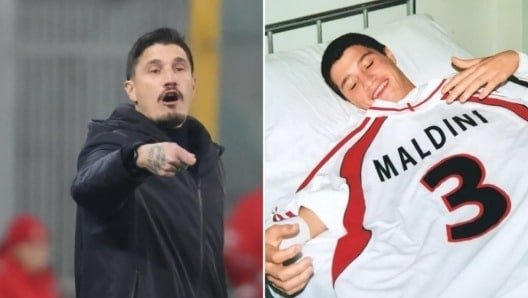
The Cagliari coach: “I studied three languages and Generation Z to become a better coach. Today’s young players thrive on praise and rarely face criticism. I built my career on reading the game in defense; if only I’d had Mina’s feet…”
In less than ten years, he went from making his Serie A debut as a player to doing so as a coach: from September 18, 2016, to August 24, 2025. Always with Cagliari. Perhaps this is why Fabio Pisacane intends to give back what he has absorbed from this land.
President Tommaso Giulini firmly believes in you: he reiterated this a few days ago, saying that “it would be a dream to secure survival with a young coach and a young team…”
“He believed in a process and not in an improvised decision. I feel a great sense of responsibility and gratitude, and I would like to repay this trust through my work and conduct.”
Where are we on that path?
“We’re on track with our goals; our daily work is heading in the right direction. We’ve had a string of misfortunes—I don’t like to talk about injuries—but our strength lies precisely in not getting discouraged or carried away.”
As a rookie coach, you’ve beaten Gasperini and Spalletti…
“Against Roma, it was about play and aggression; against Juve, it was different. Beating two masters who have always given their teams a strong identity doesn’t make me feel like I’ve made it, but it helps me say that our daily work is heading in the right direction.”
What’s the most complicated part?
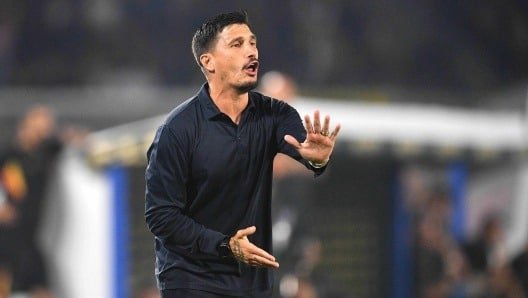
“It’s not just the technical and tactical aspects, as one might think. It’s not just about the player, but the person. There are complex dynamics, both on and off the field. Skill also lies in managing this complexity. If you’re not clear-headed, you can make a mess of things.”
When did you decide to become a coach?
“I started taking the UEFA B coaching course while I was still playing, 3–4 years before I retired. It’s a calling; you can’t just wing it—it has to come from deep within.”
How would you describe yourself?
“Not a purist, but obsessive about the number of matches I watch at all levels. The Italian school is the best in the world.”
Have you stayed curious?
“ I took a course on Generation Z—those born from 1995 to the early 2010s. I want to understand their world because I want to know which buttons to push. They thrive on applause and few reprimands. Our generation was the one that said, ‘When the going gets tough, the tough get going’; Generation Z says, ‘When the going gets tough, you shouldn’t be here.’”
Did you take any other courses?
“I went to Salzburg, to Red Bull. And then I studied English, Spanish, and French. And a course at Bocconi on communication.”
How do you communicate with younger people?
“You have to choose your words carefully: either you build a bridge or you put up a wall. You have to be crystal clear; they’re overprotected in the real world but abandoned in the digital one. We work a lot with video. If I were to speak to these kids the way coaches spoke to me back then, I wouldn’t get anything across.”
Are you more results-oriented or style-oriented?
“I like to stay in the middle: if I were results-oriented, I’d betray the game; if I were style-oriented, I’d betray the team—I’d just be coaching myself. It’s hard to win games like the ones against Juve: there’s discipline, spirit, and sacrifice, but little in the way of quality. But a team like ours can achieve the impossible.”
We’ve often seen a different Cagliari…
“I prefer positional soccer that embraces the relational aspect: the two can coexist. And we have to bring home points, not compliments.”
In Florence, what’s the mistake we must avoid?
“Losing focus. We have to play a flawless game.”
What kind of defender were you?
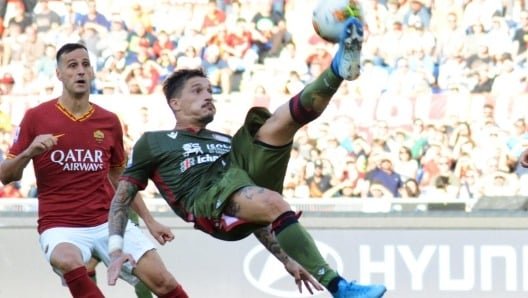
“I built my playing career on anticipation. The ideal would have been to add Luperto and Mina’s footwork to that.”
Your Cagliari side seems balanced, just like you…
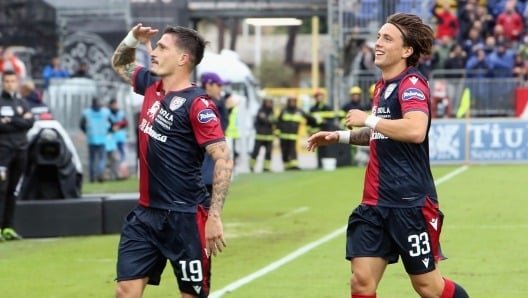
“Staying balanced gives us a chance to survive. I’ve weathered many storms in my life.”
You’ve faced some setbacks in life, but you’ve always bounced back: where does your strength come from?
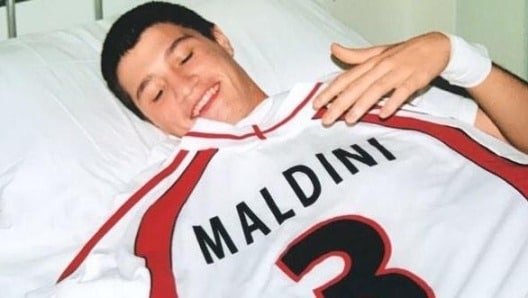
“Ever since I was diagnosed with Guillain-Barré syndrome at age 13. I found myself confined to a bed. I’m strong because life forced me to be, not because I chose it. An illness, if it doesn’t kill you, comes to make you whole. It gave me the push to shed some of my weaknesses and fears. I also believe there will be something after this earthly life.”
Who is a role model for you?
“ My father, Andrea—he’s seen me cry so many times. He was the one who slept beside me in the ICU when I was a kid. He’s my safe haven.”
Her brother was shot in an ambush in Naples a few weeks ago.
“He’s fine now; they’ve discharged him from the hospital. His life was never in danger. It was an event that left a mark on me, but it builds inner strength.”
Did you expect Palestra to break out?
“He has untapped potential. He’s done a lot on instinct; if he raises his quality, he’ll become incredible.”
Are you self-critical?
“Yes, I’m not overly proud, and I don’t hold grudges. I start from the principle that I can learn, not that I can teach.”
What do Naples and Cagliari represent to you?
“Naples is my roots. Cagliari welcomed me; this land gives you respect and honesty and demands consistency. And I don’t want to betray it.”