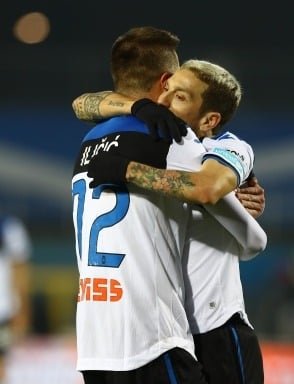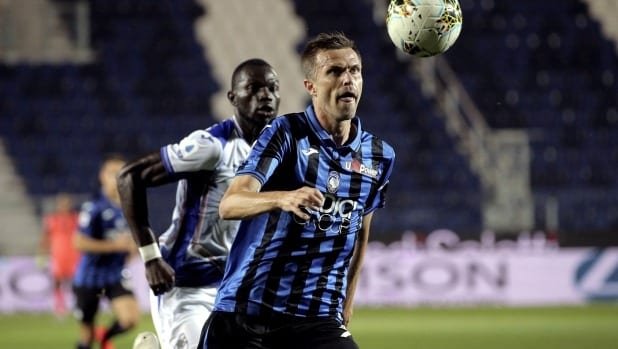
The Slovenian striker: “In Bergamo, it was love. We were rewriting history. Gasperini pushed me beyond my limits. Between training sessions, I was throwing up.”
Josip Ilicic tells his story through pauses, silences, and unspoken words. He reveals what he has experienced through his facial expressions. He sends messages in bottles to the faces and squares of a lifetime, keeping some parts of the text to himself. He opened the door for the first time, revealing the darkness that almost swallowed him up in a small room at the Bonifika, the stadium of Koper in Capodistria, the city where he chose to start again at the age of 37 in the Slovenian first division.
Josip, no thought of quitting?
“Actually, I did think about it, but I’ve known the manager and the president for 25 years. When they asked me to give them a hand, I accepted immediately. As long as I’m physically well, I want to enjoy it.” So you’ll finish your career in Slovenia? “Yes, it’s given me my bread and butter. I was born in Bosnia, but I don’t remember anything. My father died when I was a year and a half old. I grew up with my brother and my mother, who taught me to fight. My shots, my left foot, were born on the streets.“
Palermo were the first to notice him.
”Maribor’s sporting director called me into his office after the first leg in Slovenia. ‘We’ve sold you,’ he said. ‘Where?’ I asked. ‘We can’t tell you anything.’ I didn’t know what to say to my wife. There was talk of Napoli. He gave me the contract to sign two days before the return leg. It had the Palermo flag on it. ‘What if I score?’ In the end, I scored and didn’t celebrate.”

Sabatini said he was struck by his “biological sadness.”
“From the outside, I look like I’m asleep. In Bergamo, they called me ‘the grandmother,’ but I never want to lose. I tell my daughters that too. But the more you hammer me, the more you insult me, the stronger I am. I go out and show you who I am. I’ve never hidden.“
He got off to a great start in Palermo.
”I had a great defender: President Zamparini. He loved my style of play, as he did Pastore’s, Miccoli’s, players who always showed something different. He protected me. When things weren’t going well, he invited me to his house, sent a private plane to pick me up, and told me he had found the right coach for me. Within a month, he had already sent him away. We could have achieved so much more with that team.“
How were your years in Florence?
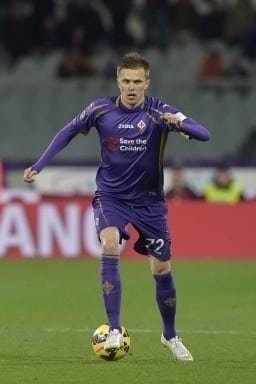
”Complex. I’m sorry to say it, but I’m done with the Florentines. They always criticized me based on how much I was paid, but in four years I was twice the top scorer and the top assist man. Was I bad? Really? We finished fourth and it wasn’t enough. We made it to the Europa League semifinals… and it wasn’t enough. Even there, I still regret losing a cup final. That said, I still have a house in Florence, which is a great city. My family goes there from time to time.”
How did Atalanta come about?
“I had finished with Sampdoria, but the day before the medical, Gasperini called me. ‘Will you come and play for me?’ he asked. ‘Coach, I’m going to Genoa, I can’t.’ ‘Sartori will call you, don’t worry.’ When I told him how much I would earn, he replied, ‘So what? What’s the problem?’ That’s when I discovered what it means to go on a training camp with Gasperini.”
Tell us about your preparation.
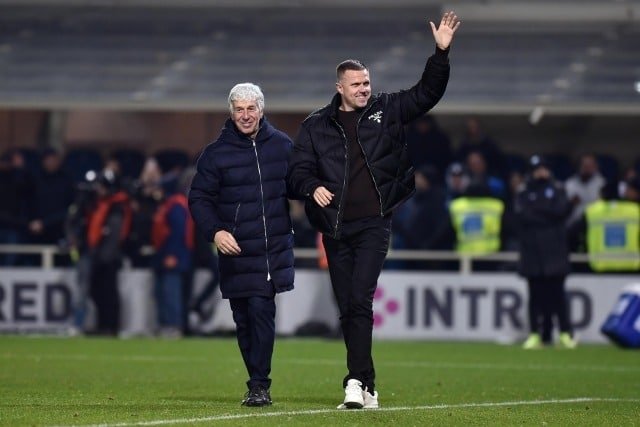
“Between training sessions, you can’t sleep: your legs are throbbing, you’re tired, you feel like throwing up. But it gets into your head like nothing else. If you pass the training camp test, which is three weeks of double sessions and running in the woods, then you understand. How many games did we turn around thanks to that run? We lasted 90 minutes, the others were exhausted after 60. Every now and then we had arguments with Gasp, but when you love someone, you argue.“
What was that Atalanta team like?
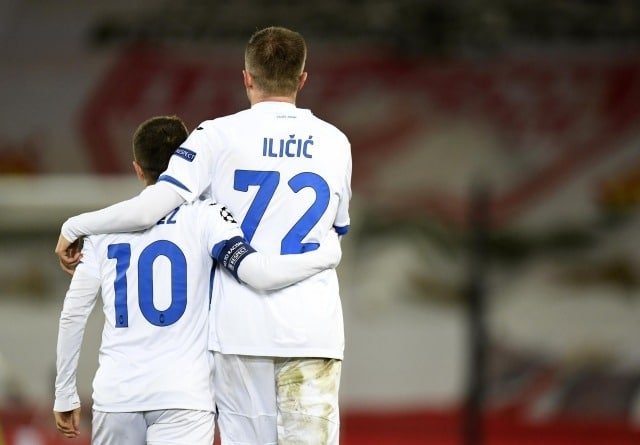
”Two years ago, I met Paratici in London. He told me we had a championship-winning attack. That’s when I understood everything. Me, Papu, Muriel, Pasalic… we could have played with our eyes closed and still scored goals. No one else did what we did. We were strong, magical. Two goals at Anfield, five at Milan, five at Parma. That group was missing a trophy. We played in two Coppa Italia finals, but it’s as if I didn’t play in the 2019 one.
Does Bastos’ hand still bother you?
“I’ve never seen Percassi so pissed off. Never. It was a penalty and a red card. I’ve lost four finals, but that one remains the worst.”
Let’s move on to Valencia-Atalanta. The best night of your life with four goals in the Champions League, before the darkness.
“Many people say to me, ‘But if what happened hadn’t happened, COVID, depression and all that, where would you be now?’. I don’t know, but we would have reached the Champions League final. I was in the best shape I’d ever been in, and we weren’t afraid of anyone. Real Madrid coming? OK, but prove you’re better than us. That was our thinking. And Atalanta, in Valencia, changed the history of soccer. We became an example. And in the meantime, the world began to stop, turning off the lights…”

And you too. Did you ever think you wouldn’t make it?
“I don’t talk about private matters. I was offered money to tell my story, but I’m keeping the details to myself.”
How did you get sick?
“I didn’t know if I would ever play again, and when you’re stuck at home, you start thinking. I spent 42 days in Bergamo without my family. I suffered. Money, contracts, I didn’t care about anything anymore. I wasn’t well. And the rumors about my wife hurt me.“
They said she had cheated on him.
”Nothing could be further from the truth. But can you imagine me finding my wife with another man? She received incredible insults.“ Why didn’t you deny it? ”They would have asked me what was wrong, why I wasn’t myself anymore. But my family, friends, and teammates knew the truth.“ Why did they spread that rumor? ”Because I was at the top, and nothing was known about me. Something had to come out. In the end, I went home. In Slovenia, it was as if COVID didn’t exist, while in Bergamo, coffins were being paraded in trucks. It was a terrible sight. A few years earlier, I had experienced the tragedy of Astori, with whom I played for years at Fiorentina. It left a mark on me.“
Gasperini was moved when recounting his ordeal. How did that make you feel?
”It makes you understand how I was and how I felt. And who we were, the two of us, together. I can’t forget what he did for me. In 2018, I was hospitalized with an infection. I was afraid I wouldn’t wake up. After a week, he said to me, ‘Josip, get up, we have to play.’ ‘Coach, I can’t stand up.‘ ‘I don’t care, you’re staying on the field.’ He did the same thing in Valencia. After the third goal, I asked to be substituted, but he ignored me, and I scored the fourth. He pushed me beyond the limits I thought I had.”
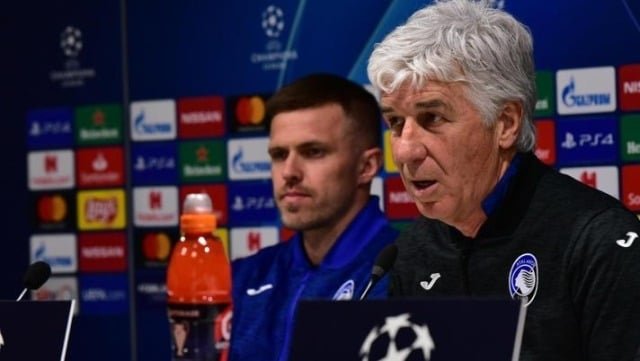
Gasp also said that in 2020 you were worthy of the Ballon d’Or.
“What can I say? I never talk about myself, but I was in great shape. I don’t know if I was ready for Real Madrid, but in 2010, in Palermo, I set foot in the gym for the first time. Maybe if I had done that at 17…”
How many teams wanted you?
“It was a done deal with Napoli, I spoke to Ancelotti, then Percassi blocked everything. Milan and Bologna also called me, with poor Mihajlovic. But I’m not crying: better to be a star in Bergamo than one of many in a so-called big club.”
Why did you leave Atalanta?
“It was because of my tendons. The ups and downs with my weight were terrible. I wasn’t the same as before. I tried injections, treatments, but nothing worked. In 2022, Monchi called me to Seville for a two-and-a-half-year contract, but I told him I couldn’t keep up with that pace anymore. In the end, I returned to Maribor.“ Did you cry when you said goodbye to Bergamo? ”I was sad, but at the same time happy to be returning home after 12 years. In 2023, when the fans came to visit me in Maribor, I was moved. When you approach the end of your career, you begin to understand what you have done.”
Was there a moment when you thought, “I was loved in Bergamo like few others”?
“When I went to see Atalanta vs. Real Madrid in 2024. I thought people had forgotten, but the fans were singing. Modric even told me, ‘You weren’t playing, but the stadium was all for you.’ We still keep in touch with that group, even though we’re scattered around the world. We missed out on a trophy, but I’m happy to have seen Atalanta win the Europa League in 2024. When I have more time, I’d like to see everyone again. We did some crazy things. Really crazy things…”