On March 19, 1976, Eddy won his seventh ‘Classicissima.’ “Fifty years ago, I did the impossible: they said I was finished. This race shaped my life. Tadej has to drop Van der Poel on the Poggio, otherwise…”
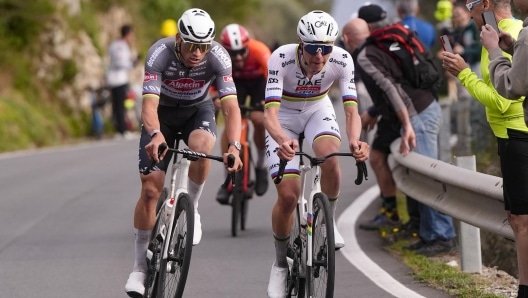
It’s the record of all records, and the day after tomorrow will mark exactly fifty years since it was set. On March 19, 1976, Eddy Merckx won the Milan-Sanremo, “a race that shaped my life,” for the seventh time: unprecedented. At the Classicissima, and at no other major cycling event: then as now, that number seven is a mountain impossible for anyone to climb. It’s no surprise, then, to hear Eddy say that on Saturday “I’ll be at home in Belgium, in front of the TV watching it. I don’t think I’ve ever missed one.” There are four days left until the 117th Classicissima, and they’ll fly by, because never in recent times has the anticipation been so intense: will Tadej Pogacar finally manage to win it, after five unsuccessful attempts? Or will he have to concede once again to Mathieu Van der Poel, who is chasing a hat trick? They won’t be alone, of course; the Sanremo is as unpredictable as anything else, yet this time the odds are largely in their favor: since Flanders 2024, after all, they’ve split all the Monuments between them.
Merckx, what do you think?
“That this could be Pogacar’s chance if… he attacks at the right moment. But the Van der Poel we saw at Tirreno-Adriatico—not just for the two stages he won, but overall—won’t be easy to beat. Quite the contrary. Tadej has to drop him, because if they’re still together after 300 kilometers on Via Roma… the favorite would be Mathieu. The long distance could work in the Dutchman’s favor.”
Recently, he told L’Equipe that this Pogacar is reminding him of Merckx before his crash at the Blois velodrome in 1969…
“Yes, I don’t see many differences. There were days when I won by a huge margin over everyone, like Liège in 1969 or the Tre Cime di Lavaredo stage at the Giro in 1968. I see the same determination in Tadej. But let’s stop there, because as you know, I don’t like comparisons, especially when comparing different eras.”
What do you think of his fourth victory at Strade Bianche, ten days ago?
“That he’s number one! But it’s clear that at Sanremo, given the nature of the race, he’ll have a tougher time in any case.”
Where should he attack to have the best chance?
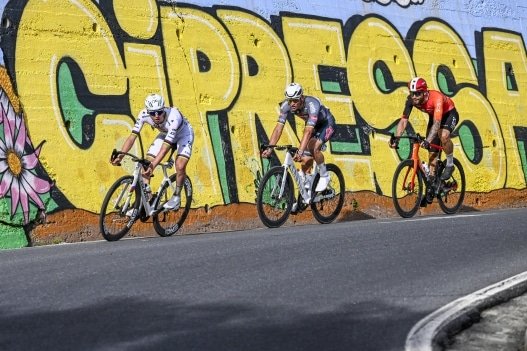
“On the Poggio. Even though he can drop everyone on the Cipressa—last year, only Van der Poel and Ganna were able to stay with him—he’s capable of long breaks. But at Sanremo, the chances of being caught up increase. And if there’s a strong headwind on the Cipressa, making a difference would become very difficult. Even for Tadej Pogacar.”
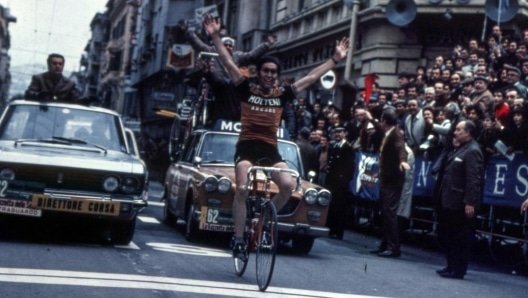
Certainly, the Classicissima is by far the biggest difference between you two: seven wins in 10 starts for you, zero in five for the world champion. And in any case, he won’t reach seven…
He smiles. “Well, we’ll see. It also depends on when he retires and whether he starts the series on Saturday. But let’s just say it’s unlikely he’ll make it.”
Can Italy pin its hopes on Ganna?
“Hope, yes. If he’s finished second twice, that means he has the potential to win in his legs. It seems to me that, compared to 2025, he’s tried to bring forward the arrival of his first major peak of form a bit, given that he’s also targeting Roubaix. On Saturday, we’ll see if that choice paid off or not.”
Let’s go back 50 years: did you expect to win, thereby surpassing Costante Girardengo’s six victories?
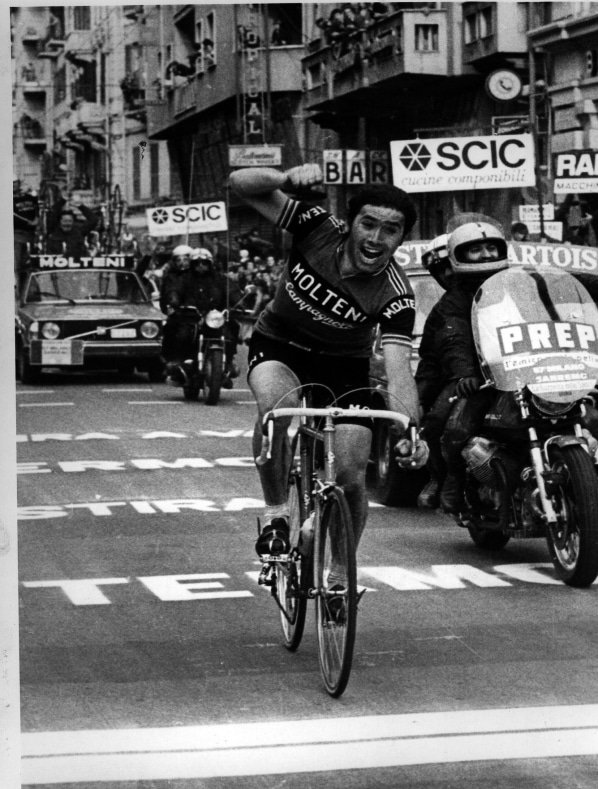
“Certainly not many people expected it. As I said in the interview with Adriano De Zan after the victory, I was disappointed that many newspapers had written ‘Merckx is finished, Merckx is no more.’ I proved that I wasn’t finished as a rider yet, even though I’d had physical problems after the crash and fractures in the 1975 Tour.”
Were you afraid of losing?
“I tried to do the impossible, to give it my all, to break away from De Vlaeminck, Maertens, Sercu… because in a sprint finish I would have risked being defeated. And I was only sure of winning when I raised my arm on Via Roma.”
Seven victories: we imagine it must be hard to pick the best one…
“No, actually it’s easy.”
Go ahead.
“The first one, the one from 1966 (it will be 60 years this Friday; ed.). I hadn’t even turned 21 yet, and it was my first major victory. Something exceptional, given my age. I’d finished my military service just a month earlier… And then, it kicked off a string of victories in Italy. It made me popular in your country, which later became a second home to me. There were huge crowds, both along the route and at the finish line. It was a tradition; the race was often held on March 19. I was coming off a winter of track racing, and that gave me a real boost.”
In conclusion: the Milan-Sanremo for you…
“It made me realize that cycling could become my life, as it indeed did.”