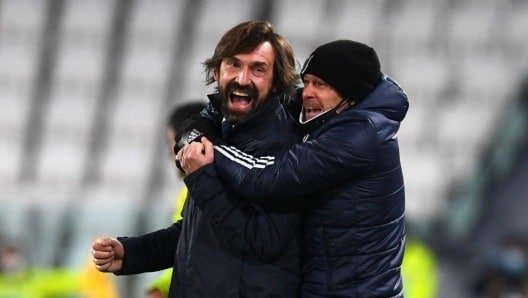
The former soccer player is now Pirlo’s assistant in the UAE: “He learned from me… Just kidding, though—I’ve never been jealous. My mom has been everything to me”
If Roberto Baronio could attend Hogwarts, he’d gladly snag the “ pensieve.” The basin for reliving memories. Every now and then he’d use it for himself, pulling up postcards from Brescia or Rome, but most of the time he’d help his mother, who has Alzheimer’s, and whom he calls once a day to tell her the same thing: “Remember that I love you.” Baronio, 48, a former quality playmaker turned coach, dusts off the album of his life from the United Arab Emirates. Since last summer, he has been the assistant to his friend Pirlo at United FC, in the second division.
How does it continue?
“We’re in second place, one point behind. After the crushing defeat at Sampdoria, with the firing after three matchdays just a few months from the playoffs we’d reached without being able to make any signings, we needed a new adventure.”
When did yours begin, though?
“In 1990, when I was 12 or 13. I used to watch ‘Galagoal.’ Alba Parietti was the host, there was a bicycle kick goal by Fonseca in Sampdoria vs. Cagliari, and the song ‘Uno su mille ce la fa’ by Gianni Morandi. That’s when I thought: ‘I have to be the one who makes it.’”
And when did you realize you’d make it?
“With Lucescu, in Brescia. He adored me and Pirlo, my lifelong friend. He called us up to the first team from the youth squad. From the backyard to the jersey of a lifetime. I grew up in a humble working-class family, with an older brother seven years my senior. Our first TV was black and white. Before becoming a soccer player, I also worked as a painter. You know those summer jobs, to earn 50,000 lire? My brother helped me out, partly because at home, back then, it was just me, him, and our mother.“
What kind of man was your father?
”He died when I was 11, on December 28, 1988. He had a cool demeanor and was a hard worker. When I made my Serie A debut with Brescia on April 23, 1995, in Bari, I wish he had been there.“
How important was your mother?
”She was everything. In the summer of 1996, before going to Lazio, I cried. I didn’t want to leave her. It took me three days to sign, even though we’re talking about a half-billion-dollar contract. At Brescia, I was making six million. At the time, Juve and Inter wanted me, but I only found out about Lazio after everything was settled. The day I left, I had four duffel bags. I didn’t know what I was doing. I really wish she could remember that.“
What does she say when she hears you?
”To try to remember that I love her. ‘I’m Roby, your son,’ I remind her during video calls. She says yes and smiles. I don’t know if she really knows who she’s talking to.”
What would you like her to remember?
“That I made our dreams come true.”
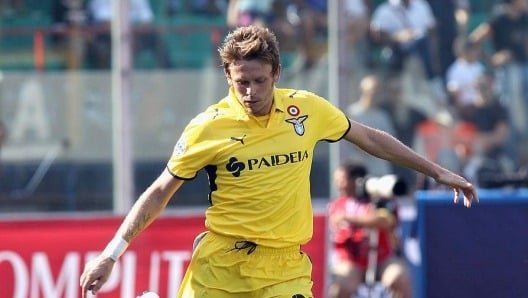
First in Brescia, then at Lazio.
“I think back to Zeman’s training sessions; I’d throw up every other night after running three thousand meters. Then we ate very little: vegetables, soups, minestrone…”
And in the meantime, Pirlo was still in Brescia.
“Moratti snatched him away from Parma and left him there. We grew up together: we won the U21 European Championship, shared a room, and played for Reggina in Serie A during the best year of my life, along with my time at Chievo. In 2000, Milan wanted me, but I chose to return to Lazio. Who knows how it would have turned out.“
Did the constant comparison with Andrea cast a shadow over you?
”I never came close to him, never. No envy. Maybe at the beginning people spoke better of me, but he wasn’t Pirlo yet. Jokingly, I tell him he learned how to be a playmaker from me. Once in New York, I told him, ‘Oh, in a few years, you’ll be my assistant.’ And he said, ‘If anything, it’s the other way around—I’ll find a team…’
And in 2020, he called you to Juve.
“We started with the U23s, then found ourselves in Serie A. Two titles and qualifying for the Champions League on the final matchday weren’t enough to keep me there. I would have stayed.”
Any anecdotes about Ronaldo?
“The first month he’d just say ‘hi’ to me, then one afternoon I took a few free kicks after Pirlo. All of them hit the top corner. He was on the sideline with Nedved; he asked him if I’d played. When I told him I’d shared a locker room with Couto and Conceicao, his face lit up. From that day on, he started calling me over for crosses. He wanted the ball at the penalty spot so he could head it. I was sweating bullets.”
And you, on the other hand, did you have a fair career?
“To be a champion, I would have had to be one in every aspect, not just in technique. I wouldn’t have won the World Cup, but with more dedication in my daily training, I could have achieved more. And sometimes I had bad luck.”
Speaking of which. What happened in Perugia with Gaucci in 2003?
“Cosmi did everything he could to get me; Gaucci didn’t. He didn’t agree on the salary. The truth is that in the first few games, where I played poorly, I had a urinary tract infection. So Gaucci went to the coach and said, ‘Either you don’t play him, or I’ll fire you.’ He wouldn’t call me up; I couldn’t talk to the press. It was a kind of bullying. Then, Gaucci again, told Cosmi to put me on the bench and not let me play. In the end, to justify it all, he came out saying that the number 13 brought bad luck and that’s why I wasn’t playing. Eventually, the club decided to put a “+” between the 1 and the 3. At the end of the season, Riccardo, Luciano’s son, called me and apologized on behalf of everyone. I struggled to respond. And I left.“
A nightmare, just like the previous season at Fiorentina with the relegation to Serie B.
”I went for Mancini, but the club was in disarray. One day Stankovic and Mihajlovic showed up, but the deal fell through because there wasn’t any money.“
And how do you view your time with Lazio?
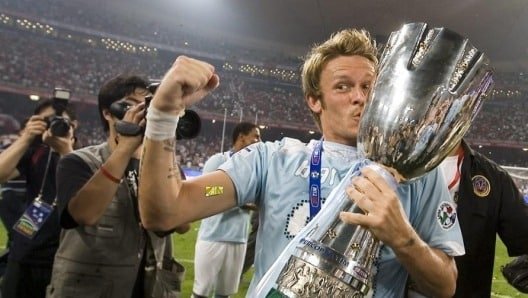
”I wanted to play, which is why I was always on loan. The only year I played was 2009–10, when I won the Super Cup as a starter. With Ledesma out of the squad, I was there. The funny thing is that by January I’d already closed the deal with Bologna, but Lotito swore he’d give me a two-year contract. ‘Come see me at the end of the transfer window and we’ll wrap everything up.’ For six months I couldn’t get in touch with him—he’d vanished. Pastorello tried every way to contact him. But I never gave interviews, never caused a fuss. It was meant to be that way.“
What would you say today to the 20-year-old Baronio?
”To do more, not to sit back. The mindset of ‘I’ll make money anyway’ was the beginning of the end. Today, I teach young people not to focus on money.”