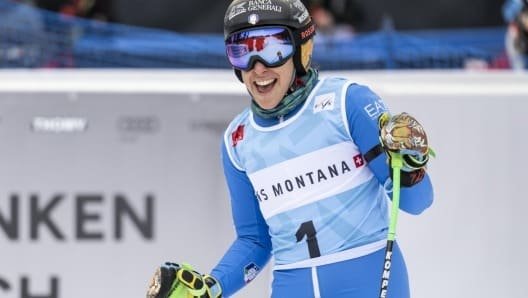
Federica: “What a boost to be the flag bearer. I would have loved to parade at San Siro, even if it meant taking a helicopter back to Cortina. But it will also be nice to parade with my team.”
The excitement is palpable. Federica Brignone is a tiger when she lowers her helmet at the start, tearing down the slope with natural class and speed, confirming her status as the most successful Italian skier in history. But when she takes off her blue suit, she is simply a free and thoughtful woman, mentally strong, tempered by experience and scrupulous management of her mental and physical balance. Had she not done so for most of her career, now that she is 35, she would hardly have been at the start of these Olympics, after the serious injury that exactly ten months ago had made everyone fear the worst. Instead, yesterday, as she entered the hotel in Cortina that is hosting the Italian alpine skiing team, she smiled for a moment.
Is Federica the one who is about to compete in her fifth Olympics?
“I’m the same as always, neither more patient nor restless. To be clear, I approached these Games without knowing the dates of the competitions. I’ll think about that when the time comes. In the meantime, I remain calm.”
Have the last few months been tougher than if you had competed regularly in the Cup?
“Definitely tougher. It wasn’t just a matter of training and then having time for my own things. I spent all my available hours first at J Medical in Turin for treatment and then traveling, either home or to some event, but always accompanied by ice and magnetotherapy. Even when I returned to the team, I didn’t allow myself a moment of leisure with my teammates in order to do two more hours of physical therapy. I gave 100% to heal.”
Did you have stronger motivation than the others?
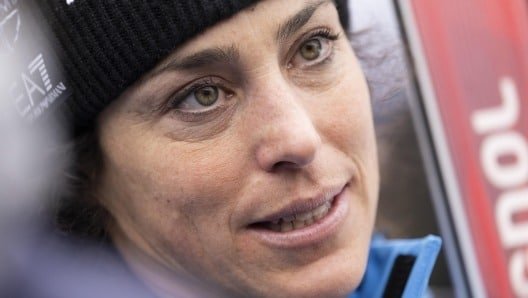
“Being the flag bearer was much more important than participating in the Games. I already knew in the spring that I was one of the candidates, and it gave me a big boost. I consider it an unattainable privilege. I’ve already competed in four Olympics and won three medals. I don’t need another spectacular result to feel happy. I’ve gone far beyond what I could have dreamed of in my career.”
You dreamed of parading in Milan, your hometown.
“I would have liked to enter San Siro. It was a sacrifice I would have gladly made, even if it meant taking a helicopter back to Cortina. But it will also be nice to parade with my team.”
From Vancouver 2010 to Beijing 2022: what memories do you have of your previous participations?
“From Canada, I remember the happiness of being there, my first Olympic village, and the contact with other sports, which was wonderful. In Sochi, in 2014, I left with great ambitions and for the first time I stayed until the end, while in PyeongChang I will never forget my first medal and the cold. Finally, China, which was a bit like a prison because of the pandemic, but the absence of distractions helped me win two beautiful medals on some really tough and cold slopes. In Cortina, I will miss not experiencing the Village, which is the essence of the Olympics, but at least we are in a real mountain environment.”
President Mattarella will be in Cortina to watch the women’s super-G.
“It’s an honor that he chose us. When he presented me with the Italian flag at the Quirinale, he was happy to see me on my feet and said he was proud of my recovery. What’s more, he is a great sports fan.“
After all this hard work, you have a wish to make. Please go ahead.
”I would like time to stand still so that I can prepare as I want to. In recent months, I have missed feeling good instead of having to stop training early because of the pain; I miss my flexibility and not being able to do everything I want to do.”
What will be the biggest challenge in the race?
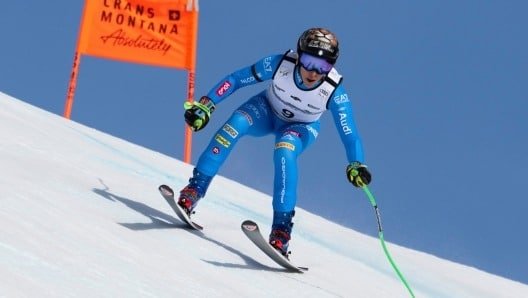
“Trusting myself, keeping my foot down in the most difficult passages, as I did last year. My goal is to be faster and faster, and I’ve been working on that in recent weeks. I have the sensitivity, but to try to reach the limit, I’ll have to be even more courageous, hoping that my body will follow suit.”
You’ve trained your body as much as possible. And how did you train your mind?
“I did almost everything on my own. After years of experience, I know what to do. With two exceptions: a hypnosis session, where the unconscious mind is at work, and then I asked Giuseppe Vercelli, our sports psychologist, for help when it was time to put my skis back on.”
You have always considered skiing a team sport. Who allowed you to be in Cortina?
“Federico Bristot, head of physiotherapists at J Medical: when I arrived in Turin, I pointed out to him that he would get bored with me, but he replied that I would be the one who couldn’t take it anymore, and he was right. He was great; in all those months, we didn’t make a single misstep. Then there were Luca Scarian, Giuseppe Abruzzini, Darwin Pozzi, and Dr. Giovanni Bianchi on the federation side. I thank them from the bottom of my heart for the pleasure they showed in following me in this miracle. This is the result of teamwork, and it will be special for them to be on the slopes too.”
What role did your mother, Ninna Quario, and your brother Davide, also in the role of coach, play?
“They gave me incredible help, with all the travel and more. It must not have been easy for them, and I thank them for that. Of course, when I started skiing again, Davide came back to follow me on the slopes together with Sbarde (the legendary ski technician Mauro Sbardelotto, ed.), and we became even closer.”
Last year, you won in Cortina for the first time. What kind of snow would you like to find to repeat that success?
“I’m speaking for my left leg: usually in Cortina you find a cold and aggressive slope, but this time I would like warm, spring-like, icy snow. In any case, I won’t have a choice. I’ve learned to give my all in all conditions, and this time too I’ll try to give 100% on the slopes, hoping that it will be enough.”