The financial year ending June 30, 2025, recorded €86 million in salaries and €26 million in amortization, the result of massive investments in the market that continued this year. The Hartono brothers cover the deficit
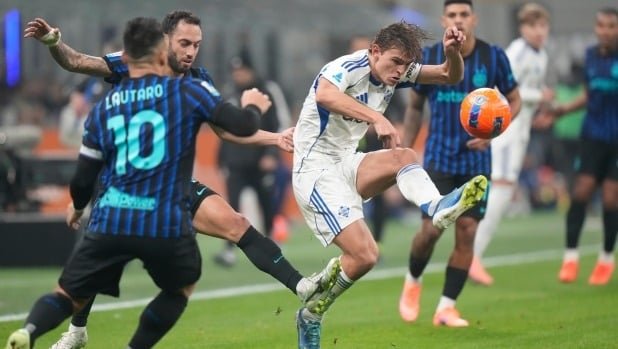
Como closed its first season in Serie A with a loss of €105 million. Against gross revenues of €55 million (including €7 million from player trading), expenses were almost triple that amount (€159 million). The lavish post-promotion transfer campaign pushed the cost of the squad up to the upper-middle class level of Serie A: €86 million for salaries and €26 million for player amortization, for a total of €112 million. Last year, only nine teams spent more: Inter, Juve, Milan, Napoli, Roma, Atalanta, Fiorentina, Lazio, and Bologna. Tenth budget, tenth place in the standings. It had been clear for some time that the league’s newcomer was not just any “provincial” team, namely since the Indonesian Hartono brothers (worth $50 billion) began their expansion phase after climbing the Italian soccer ladder from Serie D. The 2024-25 financial statements are enlightening.
Investments in building the squad amounted to $115 million for 24 transactions: $18 million for Baturina, $15 million for Douvikas, $14 million for Caqueret, $11 million for Diao, $8 million for Engelhardt, $6 million for Nico Paz, $6 million for Audero, $6 million for Valle, $5 million for Fadera, and so on. Last summer, they remained at similar levels. The wage bill then skyrocketed: from 34 million in Serie B (still a luxury for the second division) to 86 million in Serie A. The characteristics of Como’s industrial cycle are also evident in the limited use of player trading: 7 million in revenue, including 5 million in capital gains from the sales of Bellemo, Ioannou, Odenthal, Ghidotti, and Semper. However, these revenues were offset by capital losses and write-downs, which amounted to 7 million and weighed on production costs, with one item standing out: 7 million for player observation, mainly related to data analytics services. Como’s directors clearly state that the negative balance sheet result of €105 million is “a reflection of the planned investments in the sporting and commercial areas that have been made by the company and are in line with the expectations of the board of directors.” The goal is to “consolidate our position in the top flight, which in turn will generate higher revenues in the future.”
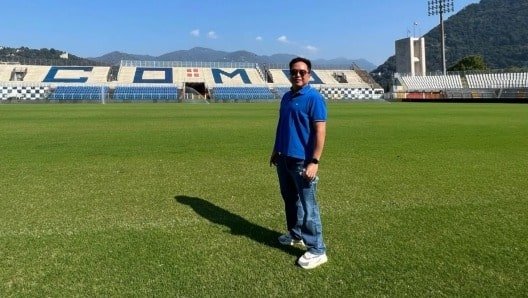
The owners— This is not the time for the Hartonos to be watching their spending. As already reported by Sports Predictions, a review of the documents of the UK-based holding company Sent Entertainment has revealed that the Indonesian owners’ total investments since 2019 amount to £335 million, equivalent to €390 million. The British company Sent Entertainment controls Como and Sent Entertainment Italy, which supports the football club in the management of its other businesses: shops, academy, digital, facilities. Pending access to the Como group’s consolidated financial statements, it should be noted that the Larian club’s turnover is not limited to the £48 million (net of player trading) reported in the company’s financial statements, but must also take into account the £13 million in revenues from Sent Entertainment Italy. Similarly, to fully capture the scale of the phenomenon, one should not limit oneself to the Como company’s loss of €105 million: Sent Entertainment Italy, as of June 30, 2025, burned through another €26 million. This is because the Hartono brothers’ investments are not limited to the team, but encompass all collateral activities, with a view to developing the Como ecosystem, including connections with the lake. Shareholders contributed $134 million to the club during the last season and $69 million between July and the end of October (in addition to $44 million to Sent Entertainment Italy).
norms— This huge contribution allows Como to avoid dependence on banks (zero financial debt) and maintain a positive net worth (€32 million as of June 30, 2025), despite having accumulated €171 million in losses over the last three years. The project, as we know, is a long-term one. We know that UEFA requires clubs participating in European competitions to be self-sufficient. Como will face this issue from the day it begins competing in European competitions. In the meantime, there are FIGC rules to comply with: unlike Nyon, Via Allegri allows shareholders to intervene in the event of economic parameters being exceeded. For example, for the squad cost ratio (the ratio between the cost of the squad and revenues), which will be the benchmark starting from the winter transfer window. The Hartono brothers will take care of bringing Como into compliance.